

Advertorial: Why every motorist needs a set of snow chains
A surprising number of South Africans believe that 4x4s and snow are a match made in heaven.
They’re not.
Every winter, motorists head for snow-covered mountain passes expecting their 4x4s to handle whatever nature throws at them. After all, if a vehicle can conquer mud, sand and rocky trails, surely a little snow won’t be a problem.
The reality is very different.
When it comes to snow and ice, traction — not drivetrain configuration or the latest off-road tyre — is what matters most. A 4WD system may help a vehicle move forward, but it does little to help when you’re trying to stop or steer on a slippery surface. Without adequate grip, even the most capable 4×4 can become little more than a passenger on its own journey.
That’s a particular concern in South Africa, where snow is relatively rare and most drivers have little experience dealing with icy roads. Add steep mountain passes, hidden obstacles, cambered sections and patches of black ice to the equation, and it’s easy to see how a scenic snow trip can quickly become a dangerous situation.
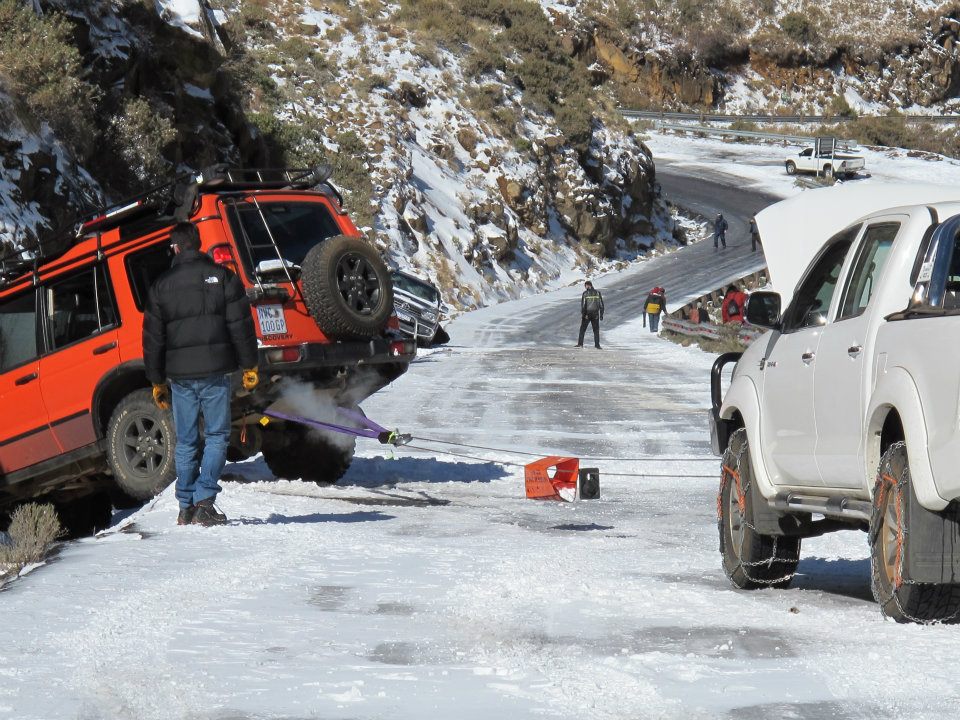
Caption: The difference between getting stuck and getting home. On snow and ice, even the most capable 4×4 can lose traction. Fitted with RUD snow chains, however, it becomes an effective recovery vehicle capable of helping others when conditions deteriorate.
Fortunately, there is a simple way to dramatically improve traction, steering and braking performance in slippery conditions: snow chains.
However, although they’re commonly referred to as “snow chains”, the term doesn’t tell the full story. Modern traction chains are designed to improve grip on a wide variety of slippery surfaces, including snow, ice, mud, wet gravel and loose off-camber roads. Their ability to generate mechanical grip makes them just as useful on muddy mountain tracks or gravel passes as they are on snow-covered roads.
NOT ALL SNOW CHAINS ARE CREATED EQUAL
Broadly speaking, there are two common styles of snow chain: the traditional ladder pattern and the more advanced diamond pattern.
The ladder-type design uses straight cross chains running across the tyre and is generally manufactured from round welded chain. While relatively simple and widely available, it only provides grip when each cross chain contacts the ground, meaning traction comes and goes as the wheel rotates.
What’s more, a major flaw in ladder chains is that, because the cross chains are not continuously tensioned, they tend to move around the tyre, limiting travel speeds to around 5 km/h in many applications.
Diamond-pattern chains work differently…
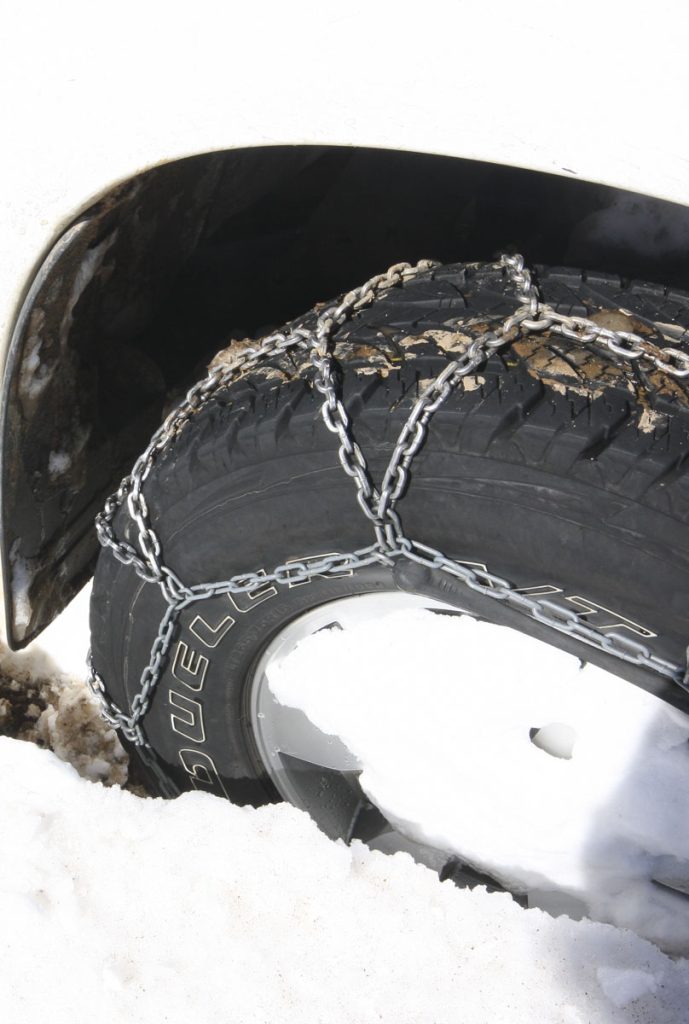
Because the chain forms a continuous network around the tyre, there’s constant tension across the entire assembly and a greater number of contact points with the ground.
Thanks to the diamond layout, there is always chain in contact with the surface, providing more consistent traction for accelerating, steering and braking, particularly on ice where maintaining continuous grip is critical.
This is one reason why simply copying the appearance of a traditional ladder chain or making homemade chains rarely delivers the same performance.
DETAILS MAKE A DIFFERENCE
The design of the chain itself also plays a significant role in how well it performs.
Quality traction chains are typically manufactured from case-hardened steel, creating a hard, wear-resistant outer surface while retaining a tougher, slightly more flexible core. This allows the chain to withstand repeated impacts without becoming brittle.
Another feature found on premium chains is the use of square-profile links rather than conventional round links. The sharp edges of the square profile effectively bite into snow, ice and loose surfaces, while the increased contact area provides additional grip.
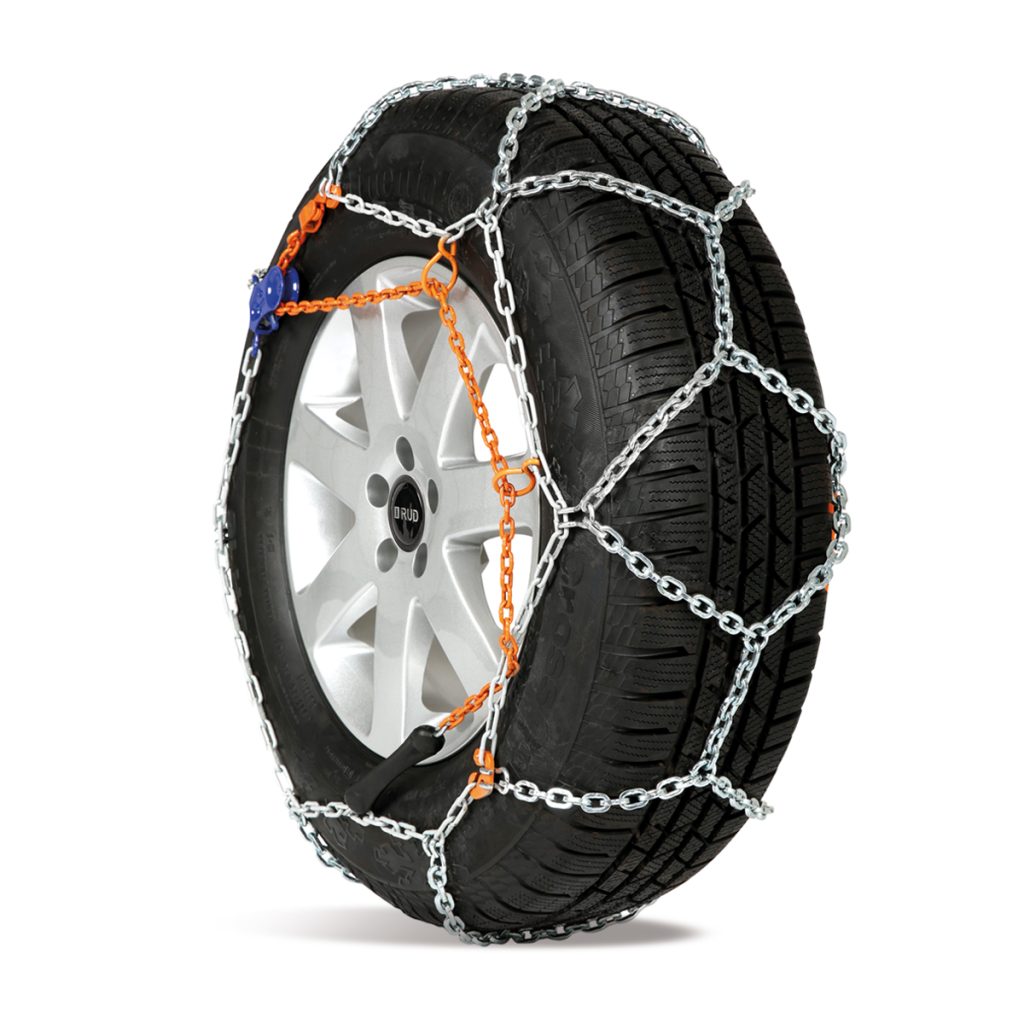
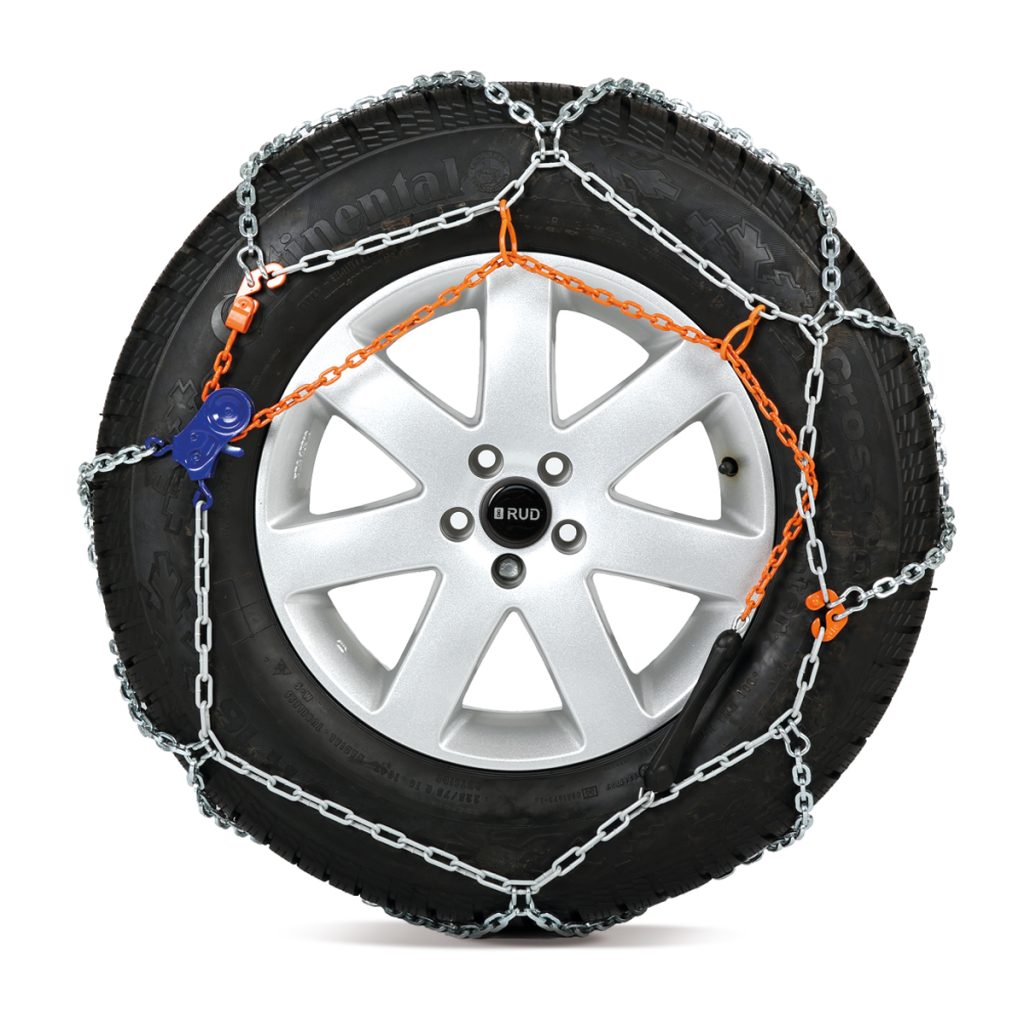
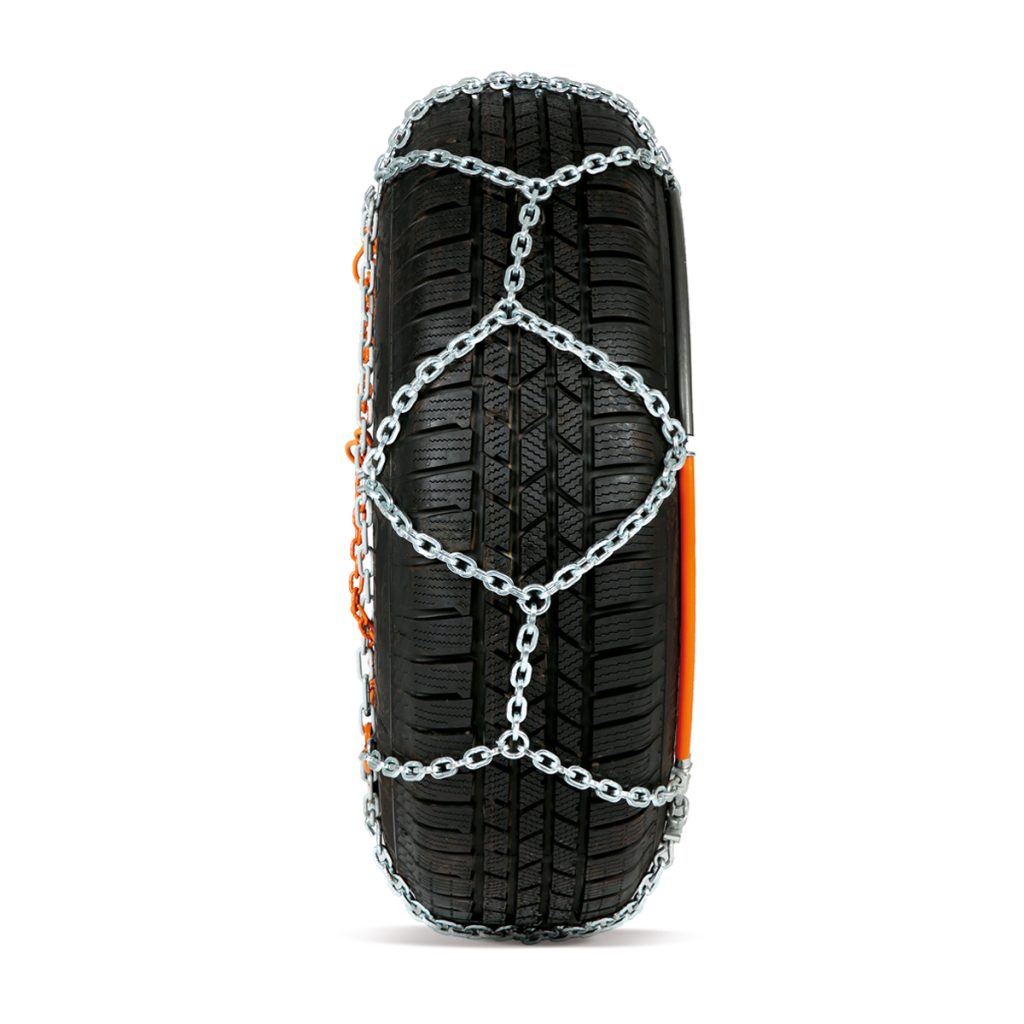
Keeping the overall chain profile compact is equally important. Fitting chains increases the tyre’s overall diameter, so minimising chain thickness helps maintain body and suspension clearance, particularly when steering is on full lock.
Drivers should always consult the chain’s product manual for the correct body-to-tyre clearance requirements and recommendations.
BUILT FOR CHANGING CONDITIONS
One of the biggest misconceptions about traction chains is that they can only be used on snow.
In reality, modern traction chains can safely be driven on hard surfaces such as tar when necessary, allowing drivers to transition between snow, gravel and sealed roads without constantly stopping to remove and refit them. That can be particularly useful on mountain passes where road conditions often change over relatively short distances.
While chains can be driven on tar and other hard surfaces, they will naturally wear faster the higher the vehicle’s speed. As a general rule, reducing speed on hard surfaces will significantly extend chain life.
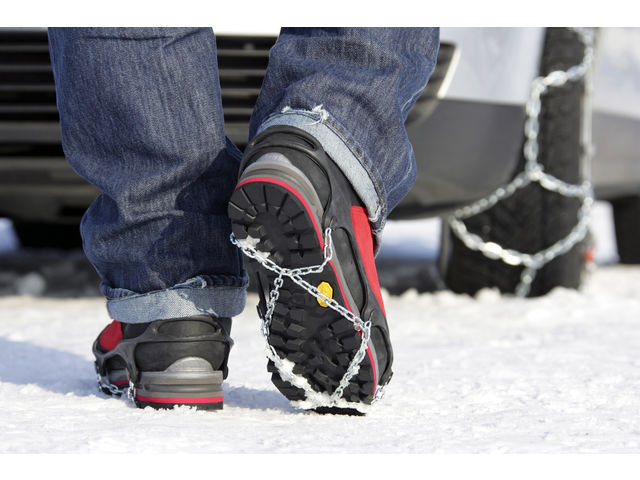
Caption: Snow chains aren’t just for vehicles. RUD’s specially designed Shoe Chains provide sure-footed grip and added confidence when walking on snow and ice.
On loose gravel, mud and similar surfaces, quality chains can comfortably handle speeds of around 30-40 km/h while still providing excellent traction.
On snow, many drivers report that the chains are barely noticeable. On tar, they produce a firmer, bumpier ride, but one that remains manageable over moderate distances.
THE IMPORTANCE OF FAST FITMENT
Weather can change quickly in the mountains, which is why ease of installation matters.
A quality diamond-pattern traction chain can typically be fitted in around 90 seconds per wheel. By comparison, traditional ladder chains can often take between ten and fifteen minutes to install, depending on the terrain and conditions.
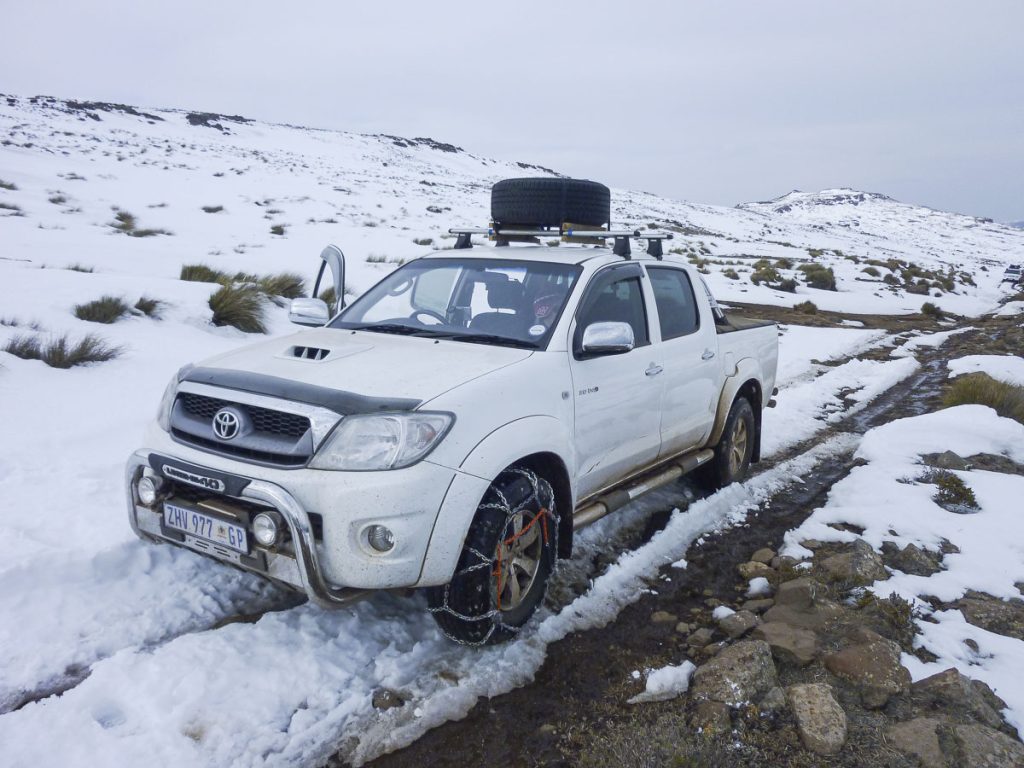
Caption: When seconds count.
RUD’s diamond-pattern chains can typically be fitted in around 90 seconds per wheel, while traditional ladder chains can take up to 10 to 15 minutes to install.
That difference becomes significant when you’re standing roadside in freezing temperatures or during a snowstorm. Perhaps more importantly, diamond-pattern chains can usually be fitted after you’ve already encountered slippery conditions rather than having to anticipate exactly where they’ll be needed.
HOW MANY CHAINS DO YOU NEED?
The correct number of chains depends on the vehicle.
At a minimum, front-wheel-drive vehicles should have chains fitted to the front axle, where both steering and drive take place.
Rear-wheel-drive vehicles should ideally have chains fitted to both the front and rear axles. This improves traction while also maintaining steering control.
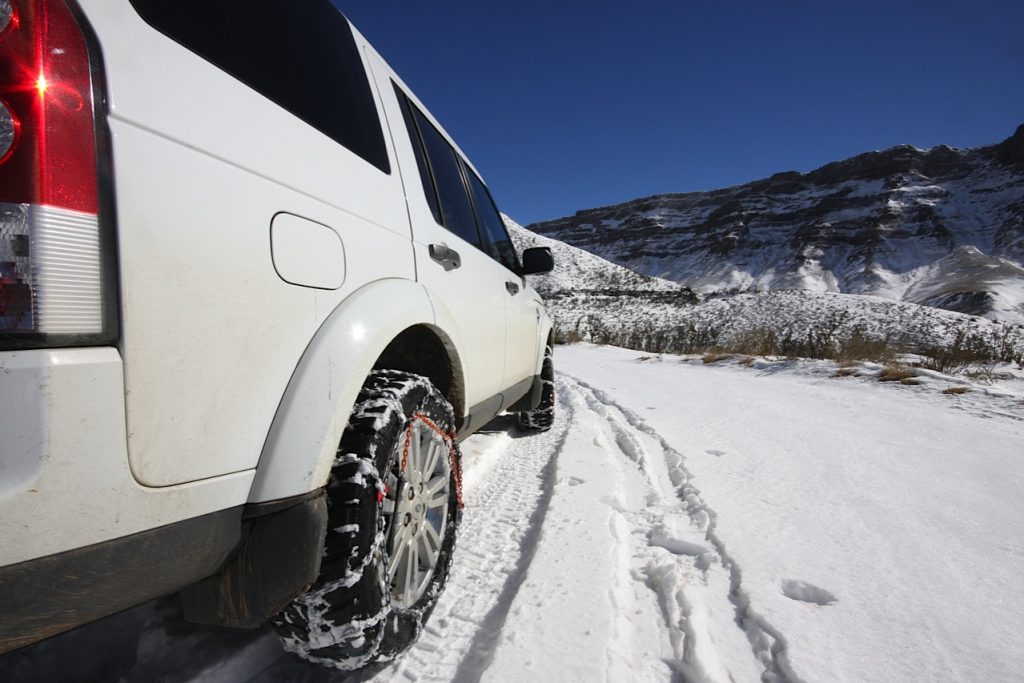
Caption: Unlike driving on sand, RUD chains are designed to be used with tyres inflated to their recommended road pressure for optimum performance and safety. They’re equally effective on loose surfaces such as gravel and mud, and can also be driven over short stretches of tar without needing to be removed.
The same principle applies to all-wheel-drive and four-wheel-drive vehicles. Although fitting one pair will significantly improve traction, fitting chains to both axles provides the greatest improvement in braking, steering and overall vehicle stability.
If you’re towing a trailer, fitting chains to both axles becomes even more important. Chains fitted only to the front axle can leave the rear of the vehicle vulnerable to being pushed sideways by the trailer on slippery descents.
A FEW PRACTICAL CONSIDERATIONS
Unlike driving on sand, tyre pressures should not be reduced when using traction chains. Tyres should remain at their recommended operating pressure to ensure the chains fit and perform correctly.
Drivers should also remember that fitting chains slightly increases the overall diameter of the wheel assembly. Before driving, it’s worth checking that adequate clearance exists between the chains, suspension and bodywork, particularly when steering is at full lock.
MORE THAN JUST A SNOW ACCESSORY
For many South Africans, traction chains are something that only comes out when snow falls.
In reality, they’re an all-season recovery and safety tool capable of transforming vehicle control on a wide range of loose surfaces and slippery off-camber terrain.
Whether you’re heading to the Drakensberg in winter, exploring muddy back roads after heavy rain in the Tankwa, or tackling loose gravel mountain passes, traction chains provide something no four-wheel-drive system can generate on its own: grip.
For those who regularly venture into challenging conditions, that extra grip can make the difference between reaching your destination safely or becoming stranded.
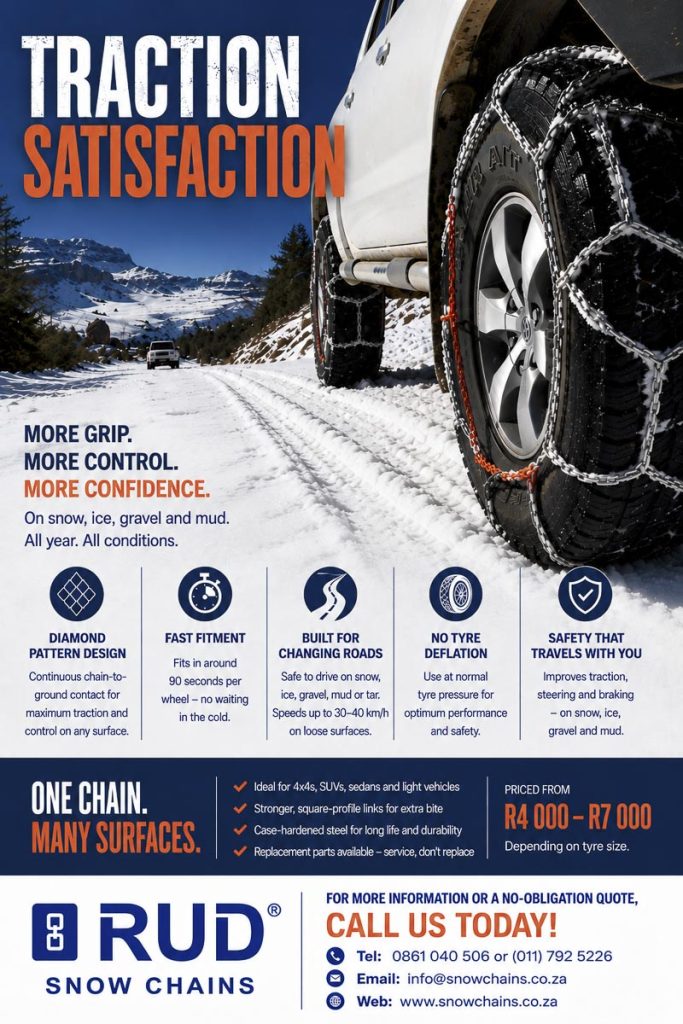
Quality traction chains are available in sizes to suit everything from passenger vehicles to heavy-duty and mining applications, with prices typically ranging from around R4,000 to R7,000 depending on tyre size — considerably less than the cost of many winches or premium recovery boards.
Replacement parts are also readily available, allowing individual components to be serviced rather than replacing an entire chain set.
For more information on RUD’s high-quality, diamond-pattern snow chains, or to obtain a no-obligation quotation, contact SecureTech:
Tel: 0861 040 506 or (011) 792 5226
Email: info@snowchains.co.za
Web: www.snowchains.co.za