
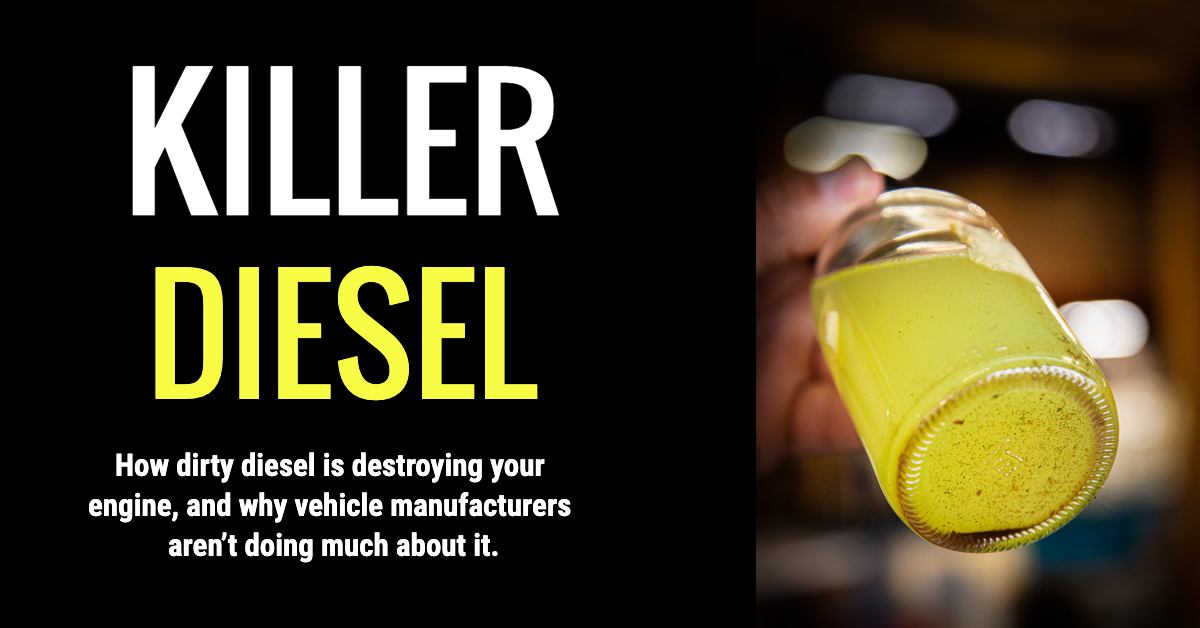
Authored by Grant Spolander and Ultrafine Depth Filtration (UDF)
Ed’s note: The feature below was published in the July/August 2025 issue of 4WD Revolution. Click here to subscribe and receive future issues of 4WD Revolution delivered to your mailbox for free.
ARE VEHICLE MANUFACTURERS DELIBERATELY AVOIDING THE DIRTY DIESEL PROBLEM?
I recall reading a story many years ago about how much it would cost to build a Fiat Uno from the parts catalogue; I think it totalled almost R1 million, at a time when the vehicle retailed for around R50k. The article wasn’t an attack on Fiat specifically, but rather illustrated that the automotive industry isn’t shy about charging hefty margins on spare parts.
But overpriced parts aren’t exactly groundbreaking news, nor are they evidence of some sinister conspiracy. But high parts prices are arguably one of the main reasons why so many people ditch their vehicles as soon as the warranty expires. The sad truth is that many of us choose to keep up with automotive debt (including the infamous balloon payment) rather than face the threat of costly repairs and spare parts.
But what if vehicle manufacturers weren’t taking steps to address a known issue in South Africa, an issue which often results in expensive repairs and subsequent parts sales? A cynical person might conclude that their failure to act was influenced by a profit motive. I don’t know. You should make up your own mind on this one.
WHY DIRTY DIESEL IS A PROBLEM
The instructions they gave me were simple: “Go to your nearest packaging supply store and buy five glass jars with sealable lids. Place the jars in your dishwasher on a hot wash. Once the drying cycle is complete and the jars are bone dry, quickly put on the lids to prevent contaminants from entering the jars. Then, visit five different fuel stations in your area (Cape Town), gather a diesel sample from each, and send the samples to our lab in JHB. When you’re next in Gauteng, come to our offices and together we’ll check the diesel quality under a microscope.”
I was chatting to Dean Puntis from Ultrafine Depth Filtration (UDF), and the above instructions formed part of my homework for this story. I’ve been wanting to write a feature on diesel filtration for some time, and after doing some desk research, I discovered that many leads led to UDF.
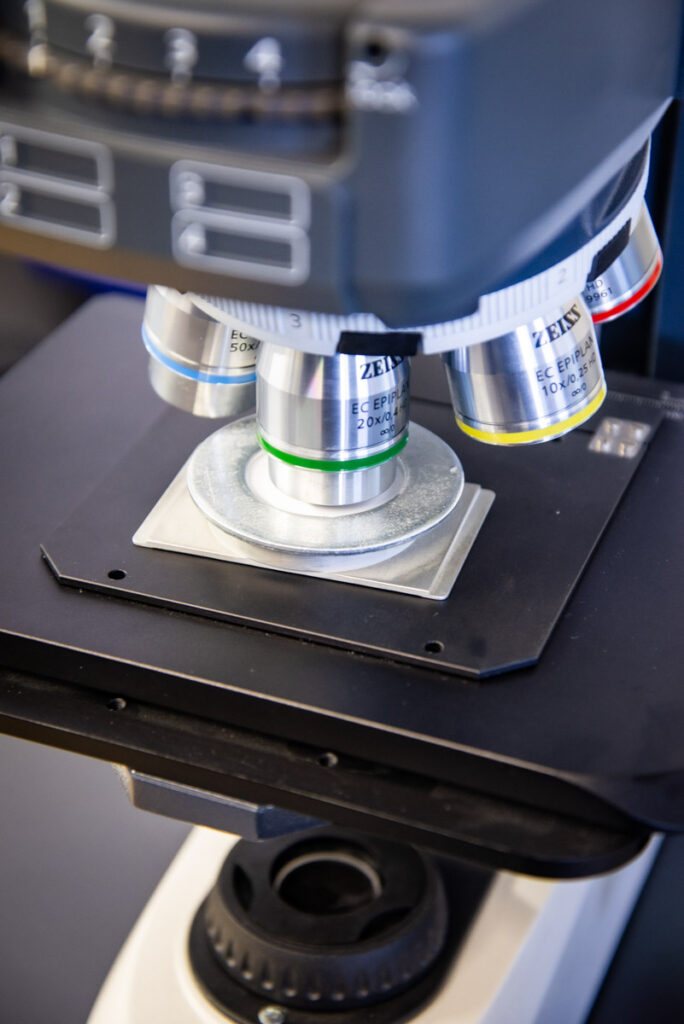
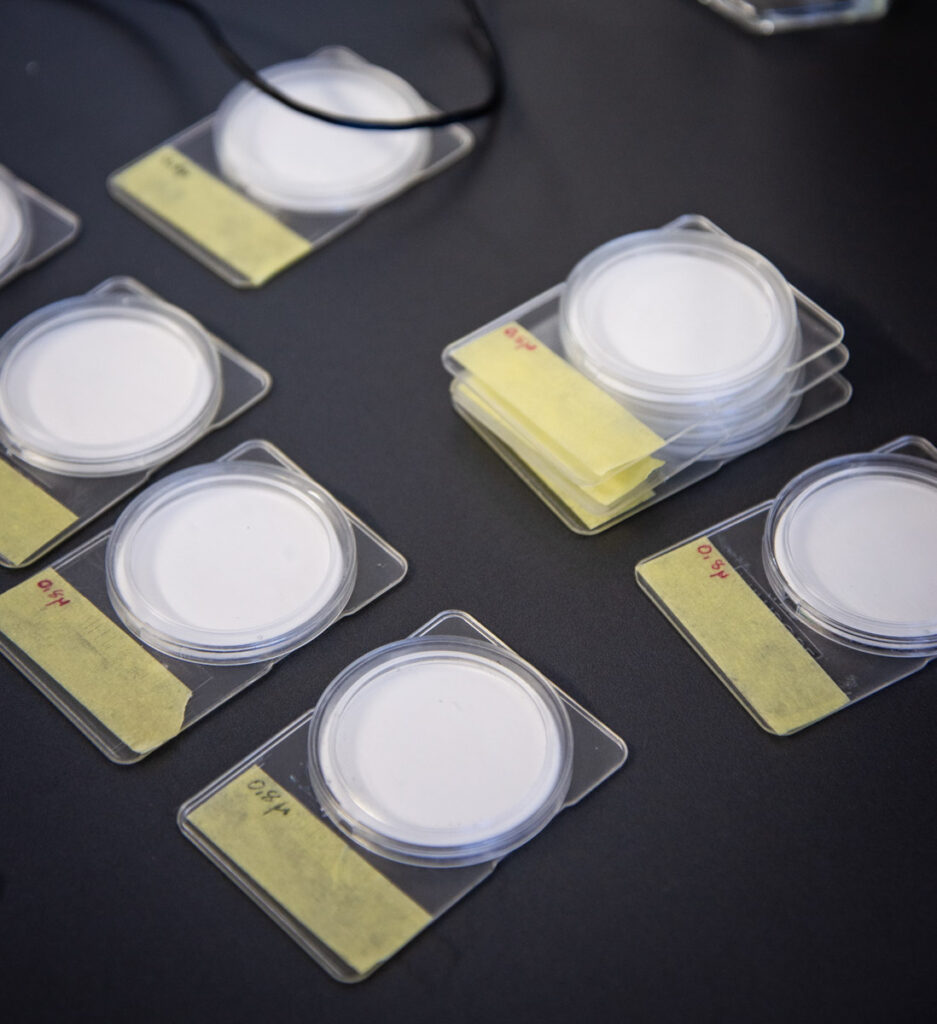
Dean wanted me to see, first hand, what the diesel quality was like in my area. I was too intrigued to turn down the offer. However, diesel quality is only part of the story…
It turns out that most modern engine manufacturers recommend a diesel filter spec of between 3 and 5 microns, whereas injector manufacturers stipulate that dirt particles should be removed down to 1 to 3 microns. Vehicle manufacturers don’t accept warranty claims stemming from dirty fuel. So, if your brand-new engine goes “pop” due to dirty diesel (and they can prove it), you’re largely on your own.
But it’s the variance between what the vehicle manufacturer recommends and what the injector manufacturer recommends that’s potentially damaging your engine. Here’s how…
POOR ATOMISATION
In modern diesel engines, fuel enters the cylinder under extremely high pressure and is atomised by the injectors into a fine mist. Proper atomisation ensures that all the available diesel is burnt, maximising energy extraction and efficiency.
But if atomisation isn’t optimal and overfueling occurs, the fuel burns during both the downward and upward strokes of the piston, raising combustion and exhaust-gas temperatures. This additional heat (which the engine isn’t designed for) not only passes through the turbocharger (causing oil breakdown and bearing failure), but can also melt pistons and cause cylinder head damage, depending on the extent of the overfueling.
“Engines and Turbochargers don’t fail for no reason, nor do injectors. There’s a reason behind the failure, and when we look closer, we find that 85 to 90% of all diesel engine failures are due to poor fuel quality, either in the form of dirt particles, water contamination, and/or viscosity” – UDF
THE DANGERS OF OVERFUELING
Even the most microscopic contaminants can disrupt the injector’s performance and the atomisation process by forming larger globules that are more difficult to atomise into a fine mist.
What’s more, contaminants can affect the injector’s performance by causing restrictions in the piston/plunger area or by wearing the delivery holes into an oval shape. As a result, instead of the diesel entering the cylinder as a fine mist, it arrives more like a jet stream or in tiny goblets. This exacerbates the problem, resulting in more unburnt fuel and higher exhaust-gas temperatures.
Unburnt diesel can pool on top of the piston, and when ignited, can result in significant carbon deposits. These deposits trap combustion heat instead of allowing it to escape through the exhaust.
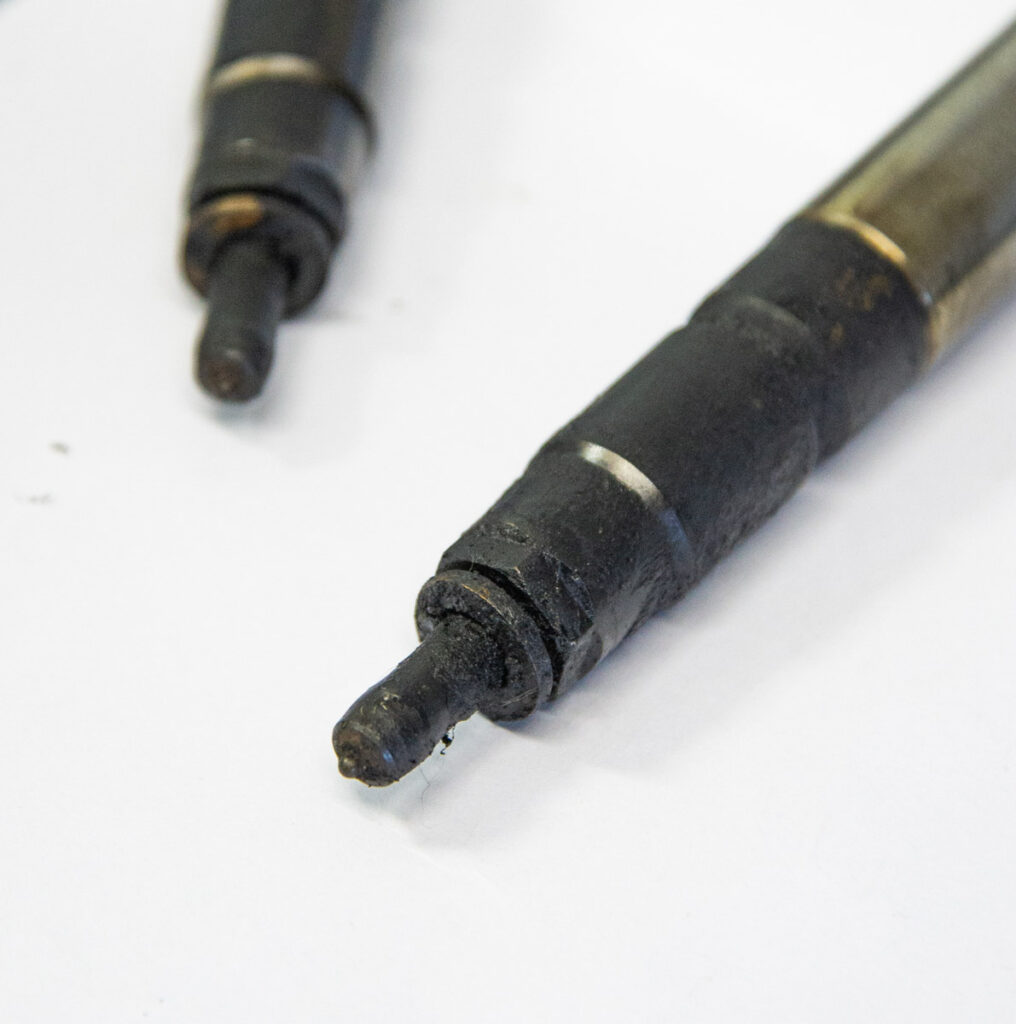
Overfueling can also lead to varnishing or “washing” of the cylinder walls, which compromises the performance of the upper piston rings and may cause diesel to leak past the pistons into the sump. This process of deterioration doesn’t take months or years, either; it can occur in just a few days, depending on the severity of the overfueling.
And, because diesel and engine oil blend seamlessly together without separating, the diesel interferes with the engine oil’s performance. This leads to changes in viscosity and a decrease in the efficacy of the oil’s additives, particularly boron, which acts as a friction modifier to prevent metal-to-metal wear.
“We generally advise people to check their engine oil quality and engine oil levels regularly, especially if they’re travelling to remote areas where poor-quality diesel is a common issue. If you notice that your oil levels are rising on the dipstick or the oil is becoming thinner, it’s quite likely that your diesel is mixing with your engine oil” – UDF
WEAR CHECK
Much like blood tests can unveil underlying health problems long before you’re aware of symptoms, oil analysis can tell you everything you need to know about your 4×4’s engine health.
Engine oils contain several additives and performance markers which quickly become unbalanced if something is wrong. The most widely known oil analysis is called ‘Wear Check’, and it typically costs around R250 per test.
The information it provides is invaluable, as it immediately tells you how the oil is performing, what breakdown is occurring, the number of carbon deposits, and the wear rate on the engine.
The team at UDF uses Wear Check reports to assess the performance of their products and to extend service intervals for their clients. The principle is straightforward: the more contaminants you remove from the diesel, the better the atomisation, leading to a cleaner burn and, consequently, cleaner engine oil.
Filtering diesel to 1 micron is not a commonly recognised concept among 4×4 owners, even though it aligns with recommendations from injector manufacturers. However, the practice offers a significant financial incentive within the mining sector.
“Most major earth-moving companies in South Africa, as well as some in Australia, are utilising Ultrafine Depth Filters. One of our clients has extended their oil change intervals from every 250 hours to every 1 000+ hours. To give you an idea, an ore-moving truck requires anywhere from 120 to 185 litres of synthetic oil. Now consider a fleet of 100 such trucks, all able to extend their oil change intervals fourfold, along with the time and costs associated with oil change services; the savings amount to millions. It’s essential to note that they continually monitor oil quality to ensure the filters are functioning effectively. We’ve only had one earth-moving equipment company request the removal of our filters because they felt it was impacting their sales of replacement engine parts. Of course, these companies go beyond what the average 4×4 owner might do by incorporating engine oil bypass filtration, which further removes contaminants from the oil. But by filtering diesel to an ultrafine level, 4×4 owners can extend their oil change intervals and save a significant amount of money.” – UDF
UNDER THE MICROSCOPE
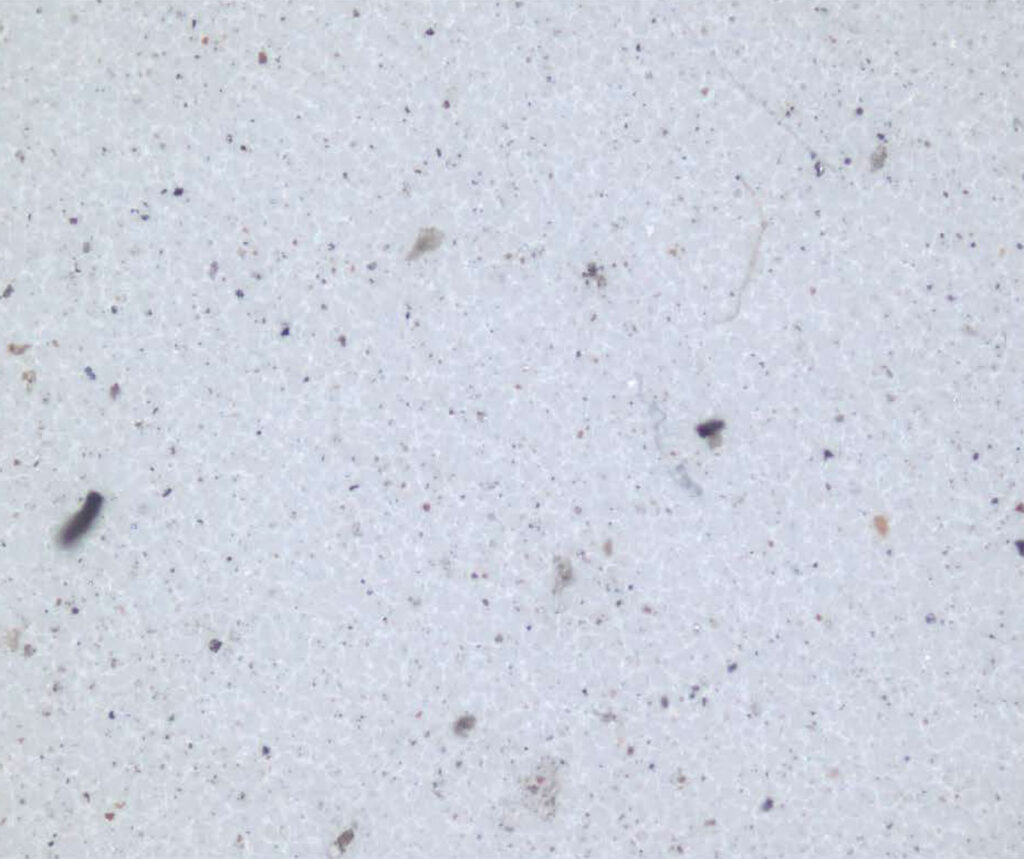
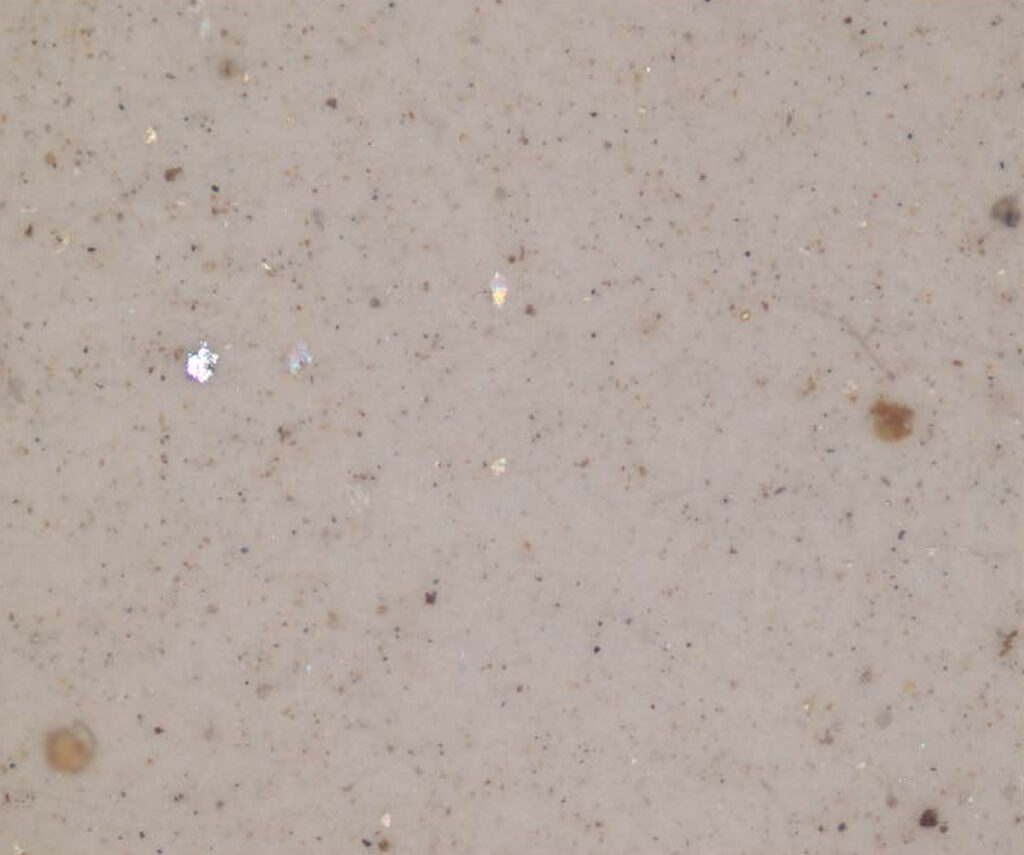
Back at the lab, I’m finally examining my homework under the microscope, feeling anxious that I might have unknowingly filled my tank with poor-quality diesel. Fortunately, most of the fuel stations I regularly visit have a relatively good reputation. One station is slightly worse than the others, but none of them is terrible. The station closest to my house looks immaculate, most likely due to the recent installation of new underground tanks.
Interestingly, busy fuel stations that constantly replenish their stocks tend to provide cleaner diesel. On the other hand, fuel stations in remote areas with tanks that have been underground or hanging in the air for decades are likely to be less reliable.
Either way, the microscope I’m looking through picks up the tiniest detail, and in the case of diesel, it’s not the big stuff you have to worry about. Most factory-fitted diesel filters easily capture large particles. It’s the quantity of the really fine stuff – usually silica – that does all the damage to your injectors.
I initially thought the diesel samples I brought from the coast would be worse than the samples collected by UDF around Johannesburg. However, when I shared this opinion with the lab technicians at UDF, they couldn’t help but laugh. “No, no, no,” they said. “Many of the samples we test around Johannesburg are horrendous!”
There are dozens of sample patches all over the UDF lab, some cleaner than others, but a number of them look like a dusty sunset over an African plain.

WHY STANDARD FILTERS AREN’T ENOUGH
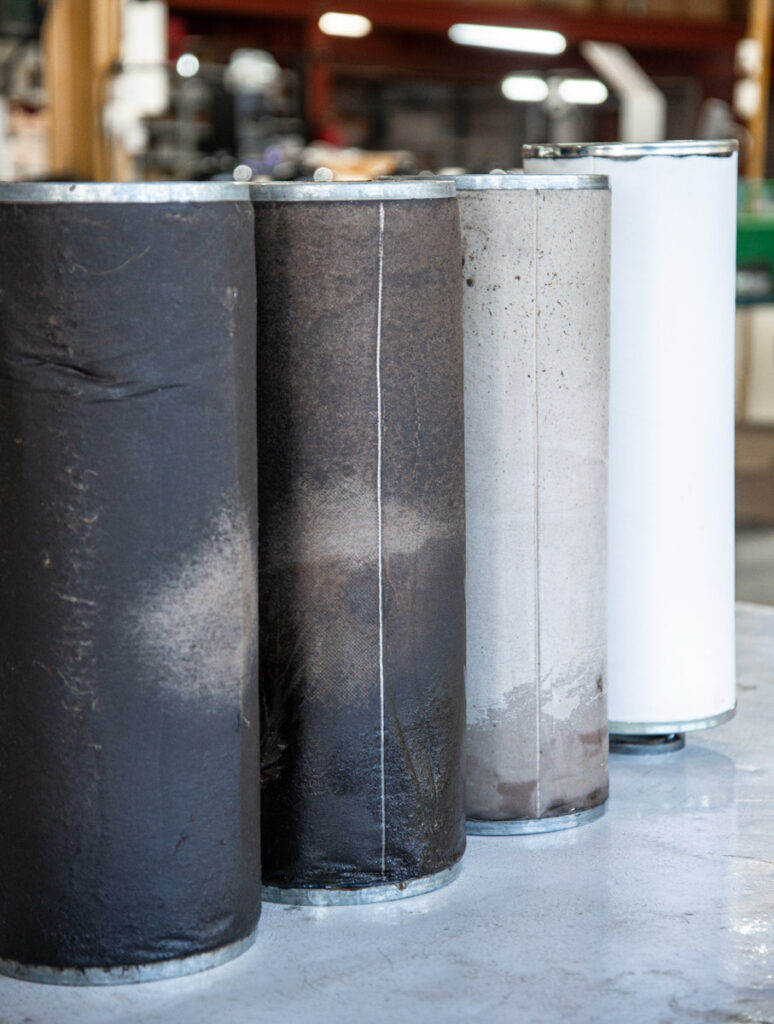
Most factory-fitted filters face a challenging balancing act. They must effectively remove contaminants while allowing sufficient flow without becoming clogged before the required service intervals. For this reason, an Ultrafine filter cannot serve as the primary filter for a vehicle, as it will quickly become clogged with contaminants, restricting fuel flow.
Therefore, any filtration system that filters down to one micron should be installed in line AFTER the factory-fitted unit.
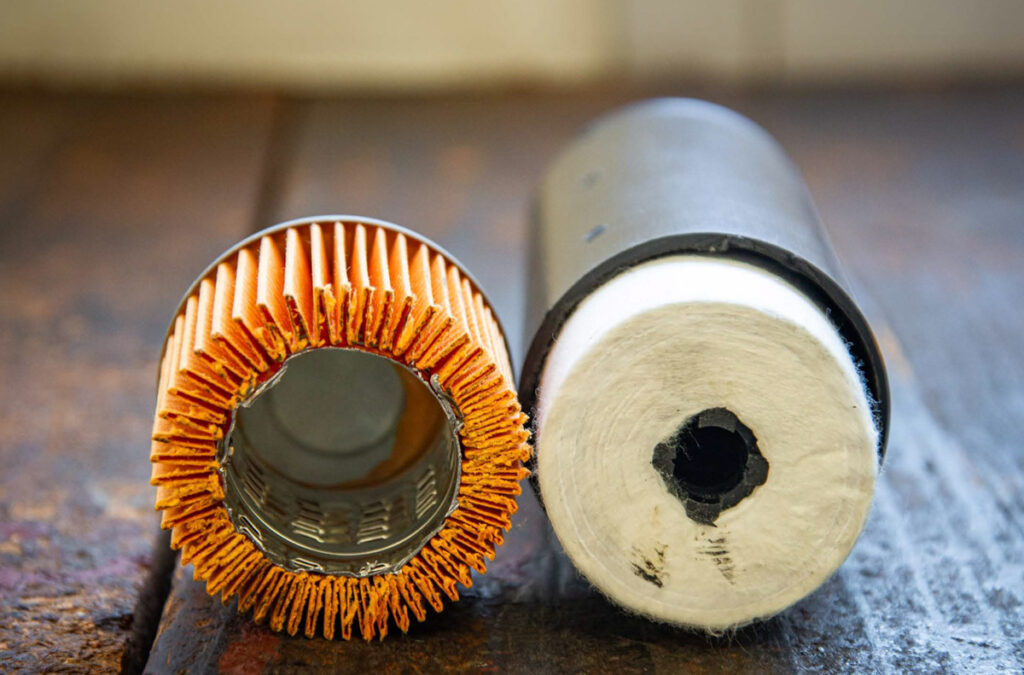
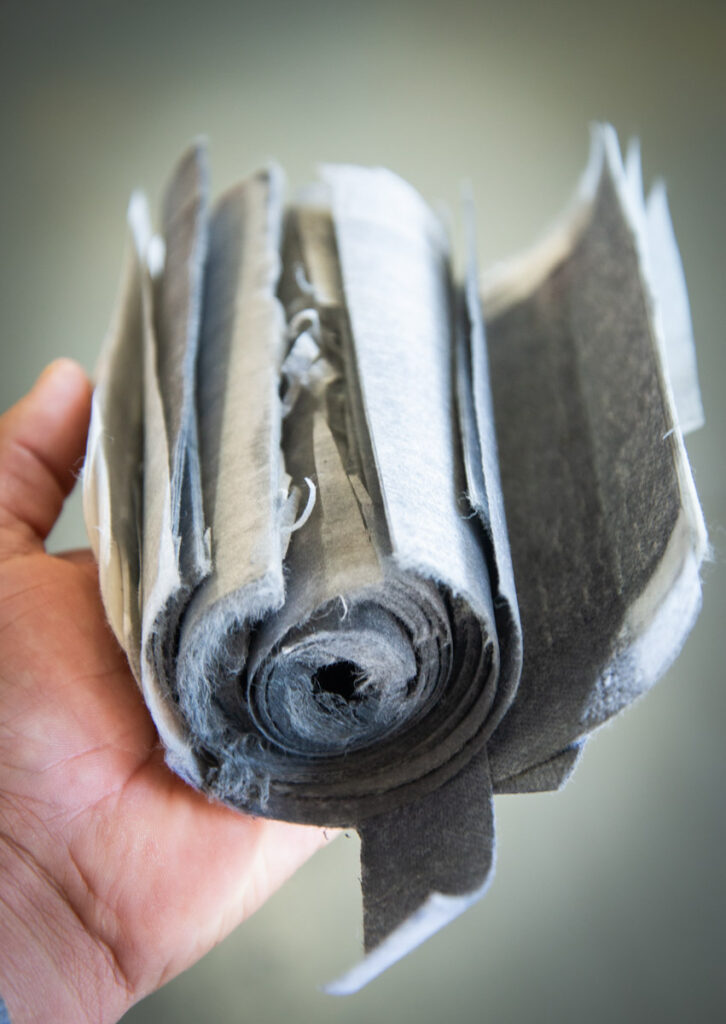
Standard diesel filters typically feature a 2-ply pleated or semi-rapped design that captures contaminants between the folds of the paper. However, what you can’t see is that smaller contaminants are captured by tiny microfibers that are barely visible to the naked eye.
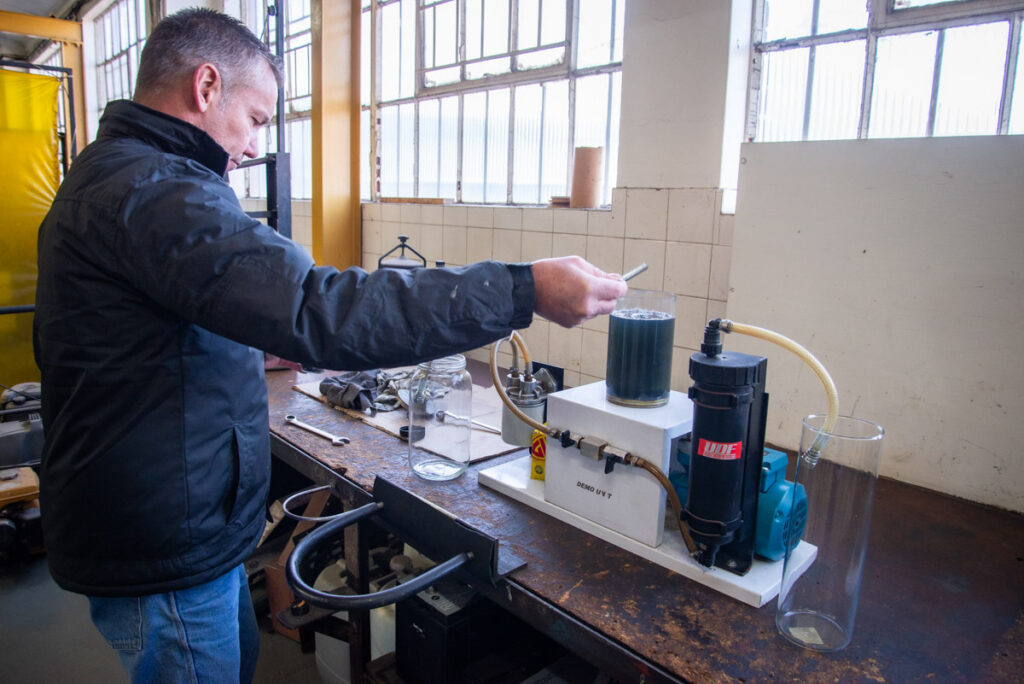
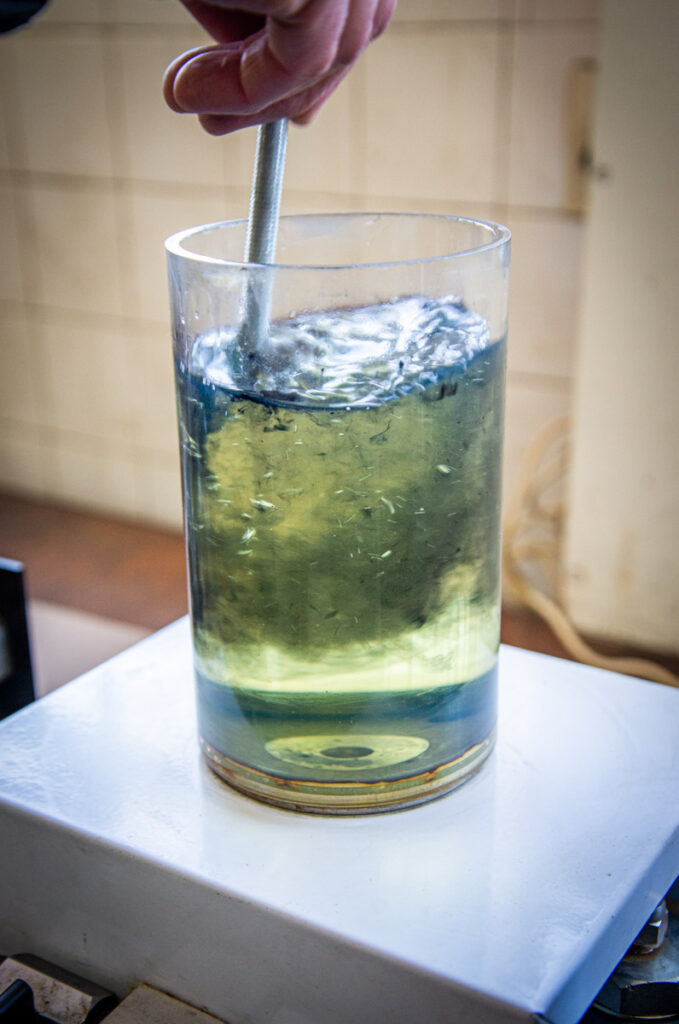
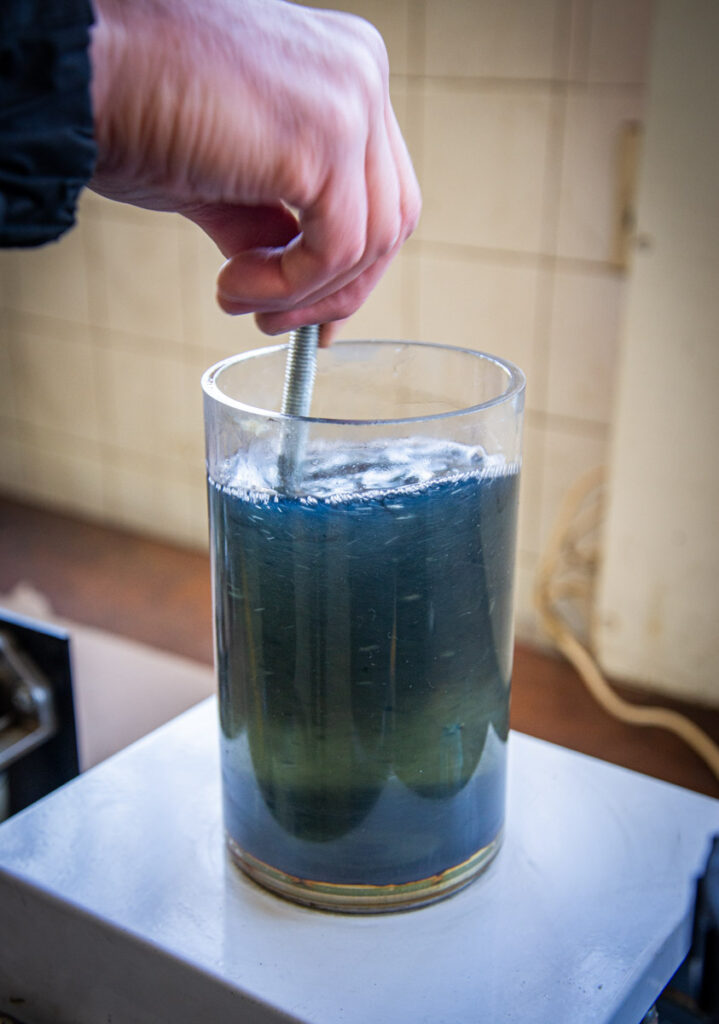
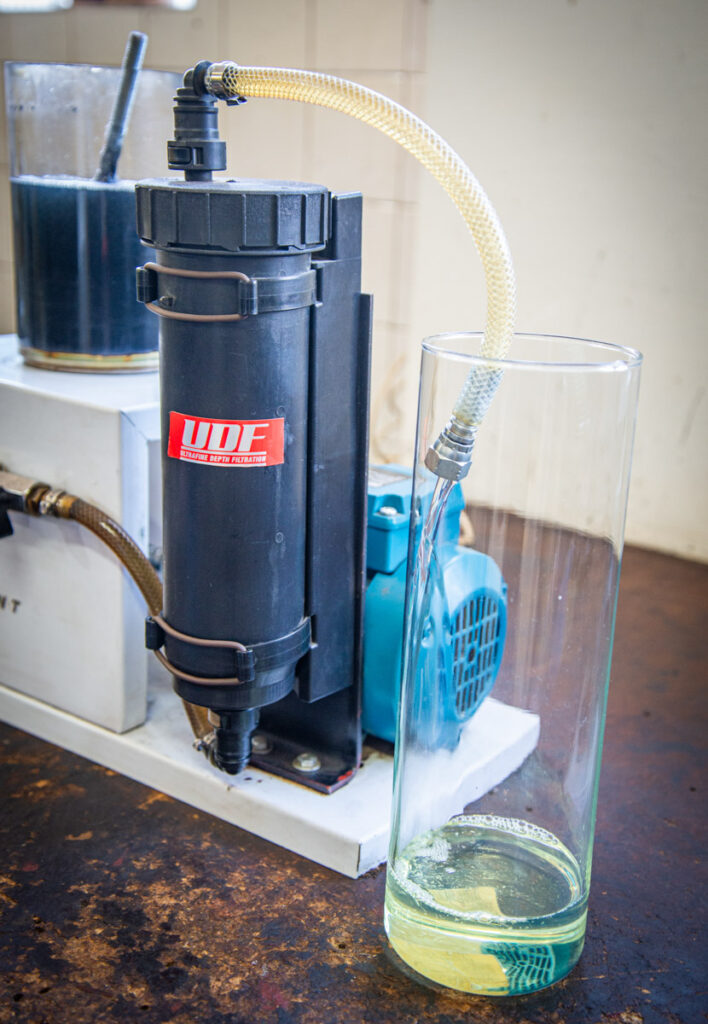
Unfortunately, these microfibers are quite fragile. When exposed to vibrations, pulsation, bumps, or impacts, they tend to break off, allowing contaminants to pass through. “Watch this,” Dean says, tapping the fuel filter with his knuckle while diesel flows through their bench-test filtration machine.
Although the standard filter appears to have removed some of the ultra-fine contaminants they intentionally add to the test fuel, the moment Dean taps the filter housing, large debris is immediately visible in the output jar. As someone who has made his career out of driving 4x4s down bumpy trails, you can imagine that this revelation came as quite a shock.
“Interestingly, an old filter often does a better job of removing contaminants than a new one because the accumulated debris helps trap even more pollutants. However, the downside is that if the filter is jolted or shaken – such as when hitting a pothole or driving over corrugations – the microfibers between the pleats can break off and release the contaminants they’ve collected” – UDF
WHERE DOES DIRTY DIESEL COME FROM?
So, where do all these contaminants come from? The engineers at UDF explain, “If you’re a fuel wholesaler, the general rule is that every time you move fuel, you filter fuel. However, the reality in South Africa is quite different. Much of the supply chain and fuel transport systems are old and unfiltered.”
Interestingly, the breather pipes you see at most fuel stations have a 180-degree bend at the top to prevent dirt from entering the tanks. That’s the only safeguard – just a bend. Apart from that, there is no filtering on the breather pipes. As temperature fluctuations occur, diesel expands and contracts, which draws air into the storage tank through the breather pipe. Over time, the inhaled debris accumulates at the bottom of the tank.
The same situation applies to most vehicles, which are equipped with fuel tank breather pipes. However, these pipes often lack filters at the end of them, too. You might be wondering about the forecourt pumps that deliver the fuel to your 4×4. While the pumps do have their own filtration systems, they typically consist of 10 to 20 micron spin-on type paper filters – similar to what’s found in most cars.
Some fuel stations do see the benefits of ultrafine filtration, particularly those that supply diesel to large fleet-based companies. Consider the potential backlash if a courier company experiences multiple engine failures traced back to a single fuel source. Not only could the supplier risk losing a significant contract, but they may also be held liable for damages.
WHAT NOW?
Although aftermarket add-on diesel filters are pretty commonplace amongst off-road enthusiasts, they’re generally the type of units designed to remove water or moisture from the diesel. While this is vitally important to prevent injector-tip failure, most factory-fitted water separators work quite well.
“Although we offer aftermarket water separators, the truth is that most standard water separators are usually quite effective. The issue lies not with the separator itself but with the fact that people don’t drain the water trap often enough. We typically recommend bleeding the separator at least once a month. If this is not done, the water level can rise high enough that it gets sucked back into the fuel line and enters the fuel system, causing super-heated steam in the injector tips” – UDF

What’s truly remarkable about this topic is that although it’s well known that diesel quality in South Africa isn’t particularly good, and there have been multiple scandals involving paraffin being added to diesel to bump up profit margins – often at the expense of your engine’s longevity, very few people are aware of diesel filtration as it relates to atomisation, oil degradation, fuel economy, emissions, performance, and engine longevity.
With that in mind, I asked the UDF team, “How many 4×4 fitment shops are reselling these filters?” They replied, “In the Johannesburg area, a few. In the Cape Town area, maybe one or two.” It’s surprising because the installation process seems relatively straightforward, and the upfront cost isn’t too bad. Less than a tenth of what an injector replacement would cost you.
This raises an important question: If ultrafine filtration is affordable, readily available, easy to install, and proven to work in the cost-driven mining sector, why aren’t vehicle manufacturers including it as a factory option? It’s an especially relevant question considering the numerous scandals surrounding diesel quality in South Africa.
I pose the same question to Dean, who replies, “In their defence, the vehicle manufacturers aren’t to blame for South Africa’s poor diesel quality. And the same wear and tear happens in overseas markets, but it just happens a whole lot faster in SA due to our diesel. As for why they don’t fit finer filters to combat the issue? I suppose that could relate to the service plan and the fact that an ultrafine filter may increase the number of service intervals needed per year just to replace the diesel filter. All in all, it’s a uniquely South African problem. And we’re small fish in a big global pond”.
Click here to contact UDF, or enter your email below to receive a free bi-monthly copy of 4WD Revolution.


