Authored by 4WD Revolution.
“How much did you pay for your all-terrain tyres again?”
You can tell by the smirk on your mate’s face that it’s a loaded question. He’s obviously got a better deal on the same tyre, but you play along anyway.
“I think it was R4.5k per tyre. Why do you ask?”
“Jeez, that’s quite pricey. I just bought the same tyre, same size, same tread pattern, for R3.5k per tyre.”
The statement stings. Not just because he’s taking obvious pleasure in one-upping you, but because you’re now wondering whether your tyre dealer ripped you off.
But wait, did he actually buy the same tyre?
Didn’t you once read an article in this very publication about how LT and P-metric tyres look almost identical, but are fundamentally different underneath?
That’s right, you probably did.
Which means you didn’t necessarily get ripped off by your tyre dealer, and your mate hasn’t necessarily scored a better deal. In fact, if you’re a 4×4 owner who regularly ventures off-road, carries a fair load, and deflates his tyres on a regular basis, you may have bought the more appropriate tyre for your application.
Here’s why…
LT VERSUS P-METRIC
As mentioned above, we’ve discussed LT and P-metric tyres before, but usually as a footnote in a broader tyre story. This time, we’re putting these two different types under the microscope and seeing how they differ — so you don’t buy the wrong tyre for your application.
To recap, many all-terrain tyres are available in two specifications: LT (Light Truck) and P-metric (Passenger-metric), with the latter sometimes marketed as an SUV tyre.
When you buy a brand-new 4×4, the chances are very high it’ll arrive from the factory wearing P-metric all-terrain rubber.
The first thing to be aware of is that there’s nothing inherently wrong with a P-metric tyre. For the average 4×4 owner, there are actually some compelling reasons to choose this type. They’re generally lighter, cheaper, quieter, and more comfortable than their LT equivalents; while their lower weight can also contribute to better fuel economy.
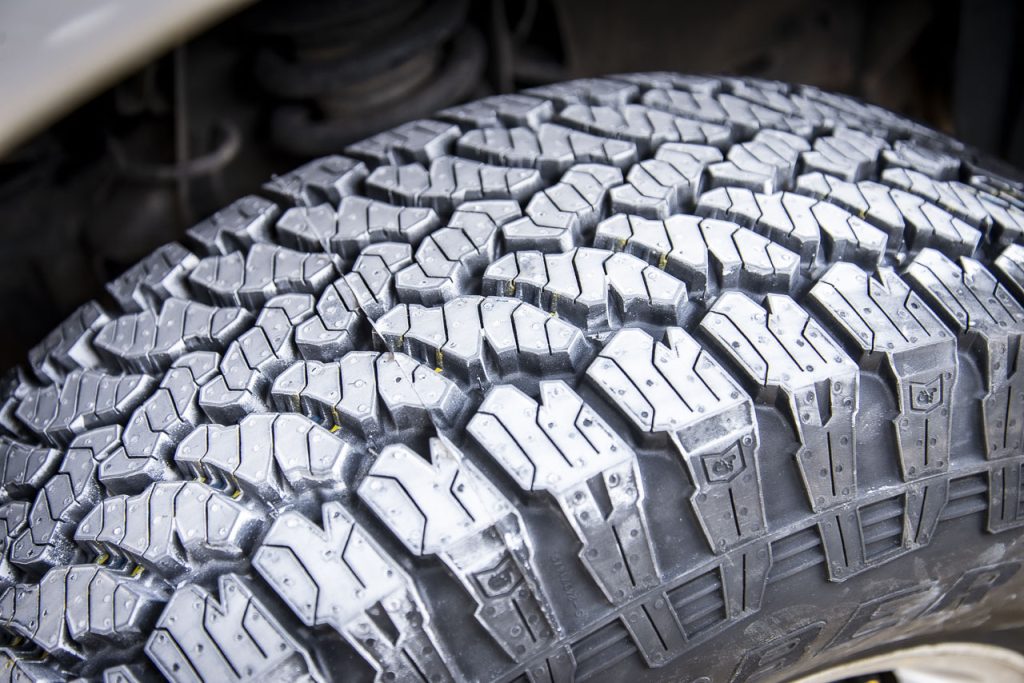
The interesting part is that an LT and P-metric version of the same all-terrain tyre can look almost identical from the outside. Same tread pattern. Same sidewall design. Same overall appearance.
But underneath that familiar exterior, you’re looking at two totally different tyres. It’s like you’re comparing a RAV4 to a Land Cruiser – sure, they’re both Toyotas, but that’s where the similarity ends.
LT tyres are generally heavier and more robustly constructed, with greater load-carrying capability, and greater resistance to the abuse associated with heavy loads, lower pressures, and rough terrain. They also often have deeper tread, although this isn’t an inherent requirement of an LT tyre.
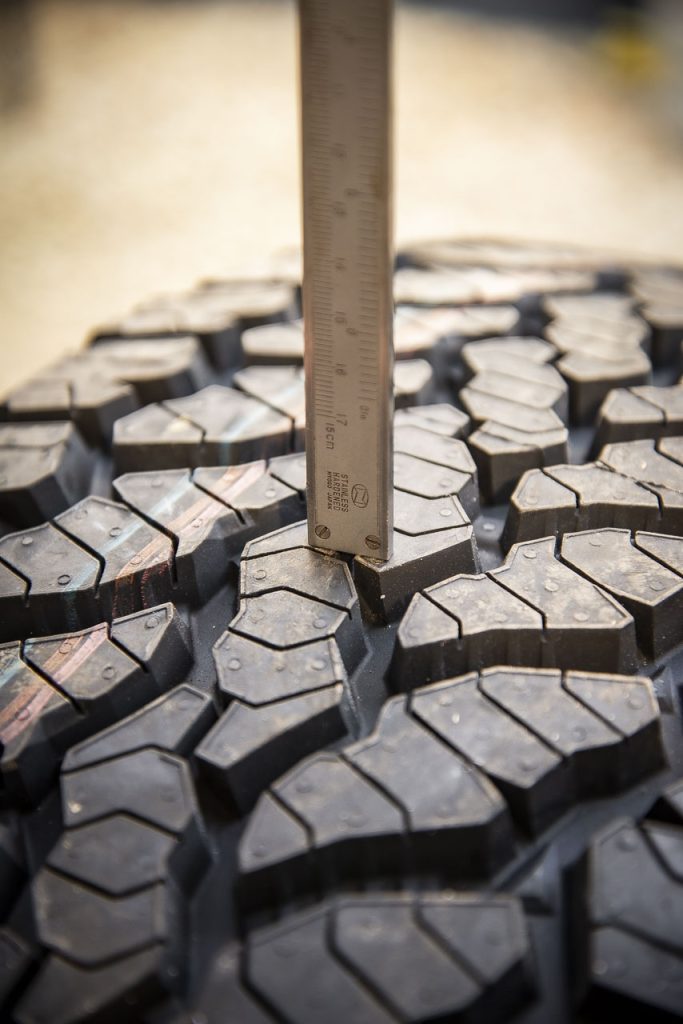
Caption: Although deeper tread isn’t a prerequisite for LT classification, LT tyres often feature deeper treads than their P-metric counterparts. Depending on your driving style and application, this can translate into a longer service life.
In the case of our test tyres, measured at the same location on each, the P-metric had 10mm of tread depth, compared with 12mm on the LT. That may not sound like much, but it represents 20% more tread — and potentially 20% more value from your tyre.
So what this means is that an LT tyre is a sensible choice if your 4×4 is heavily laden with accessories, camping equipment and other gear, particularly if you regularly deflate your tyres when driving off-road.
The reason comes down to something we can’t see from the outside: construction.
An LT tyre’s more robust construction allows it to better tolerate the additional heat and deflection generated when carrying heavy loads at reduced pressures. Its stronger casing and sidewall can also provide greater resistance to impacts, and reduce sidewall bulging when deflated.
And that matters because a sidewall puncture is a very different proposition to a simple tread puncture. While a tread puncture can often be repaired, damage to the sidewall can render the tyre unrepairable — potentially turning a chance encounter with a sharp rock or piece of debris into an expensive mistake.

THE DEVIL IS IN THE DETAILS
To illustrate some of the key differences between LT and P-metric tyres, we asked the good folks at General Tire if we could borrow two versions of the same tyre.
While many of the major tyre brands offer LT and P-metric versions of their popular all-terrain products, the General Grabber AT3 is a particularly good case study for comparing the differences.
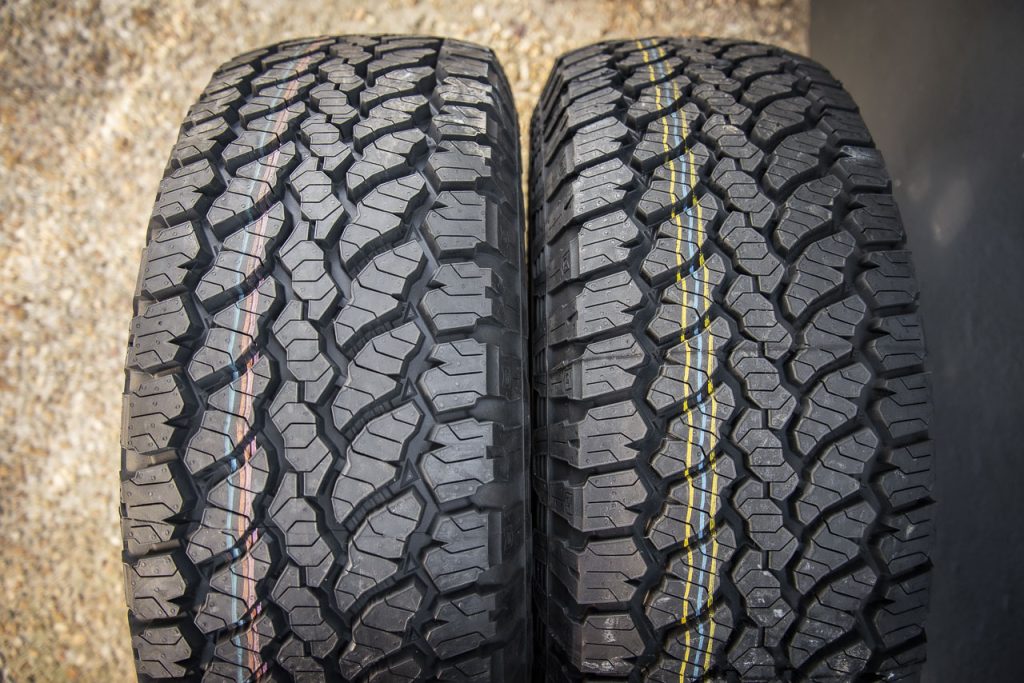
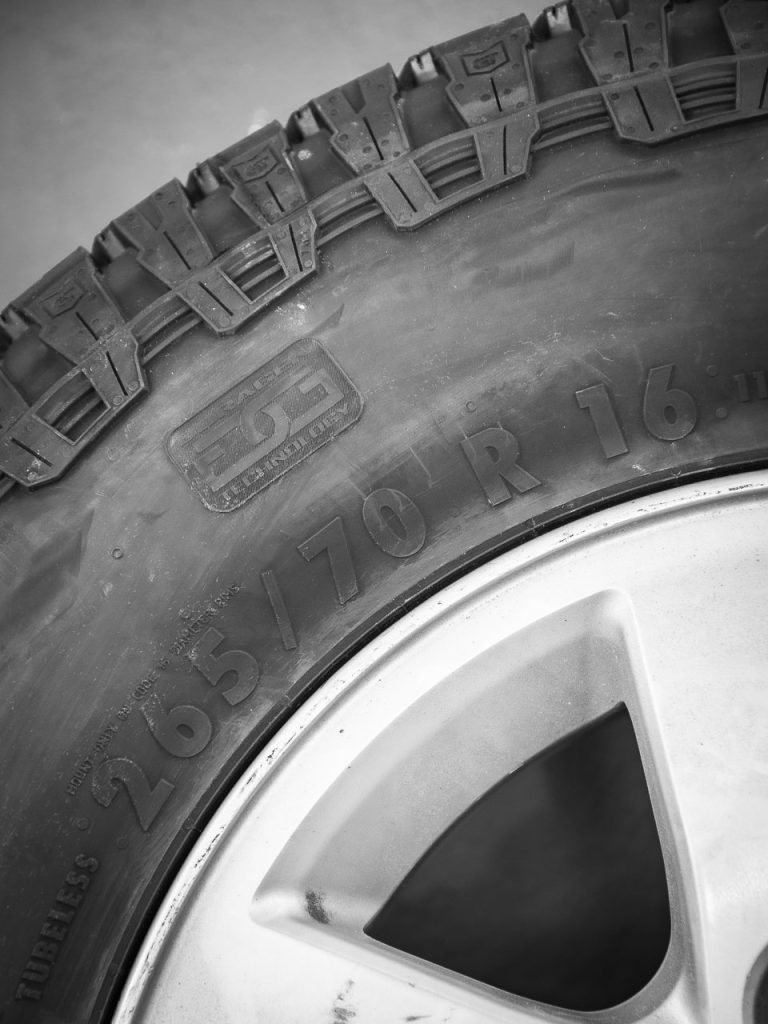
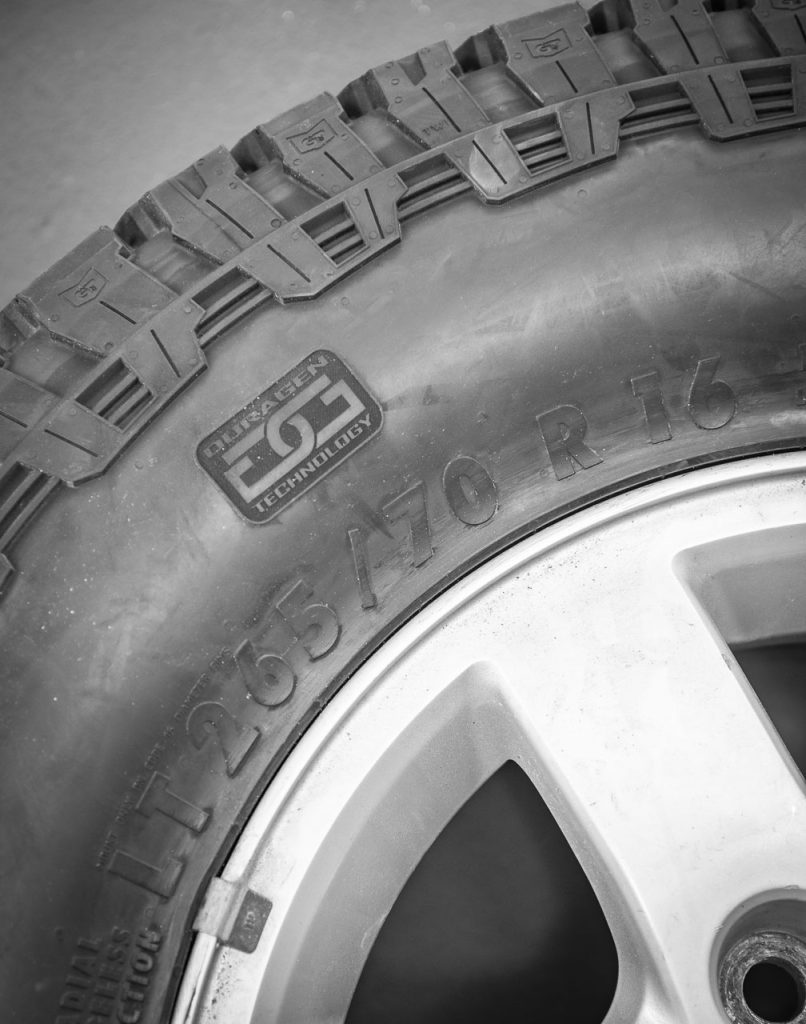
To the untrained eye, these two General Grabber AT3s may look identical, but underneath they’re fundamentally different tyres — more like comparing apples with oranges.
Whether you’re looking at General Tire, Cooper, Bridgestone, Dunlop or Goodyear, if the tyre doesn’t carry “LT” on the sidewall, there’s a good chance you’re looking at a P-metric all-terrain.
Among South African vehicle brands, the P-metric Grabber AT3 is a popular OE (original equipment) tyre, which makes it a common choice when owners come to replace their original tyres – because we’re inclined to stay with what we know.
But if you want to upgrade your vehicle’s off-road ability, the LT variant of the Grabber AT3 deserves serious consideration. Sure, it’s more expensive, but let’s look at what it offers you in real terms – actual measurements.
WEIGHT
Using a basic floor scale, the LT weighed in at 23.1 kg, versus 17.5 kg for the P-metric. That’s a difference of 5.6 kg per tyre — almost 33% more unsprung weight.
Much of this additional weight comes from the LT’s more robust construction, including its heavier casing, steel reinforcement, and deeper tread blocks.
The beefier construction allows the LT to safely contain higher pressures and carry greater loads.
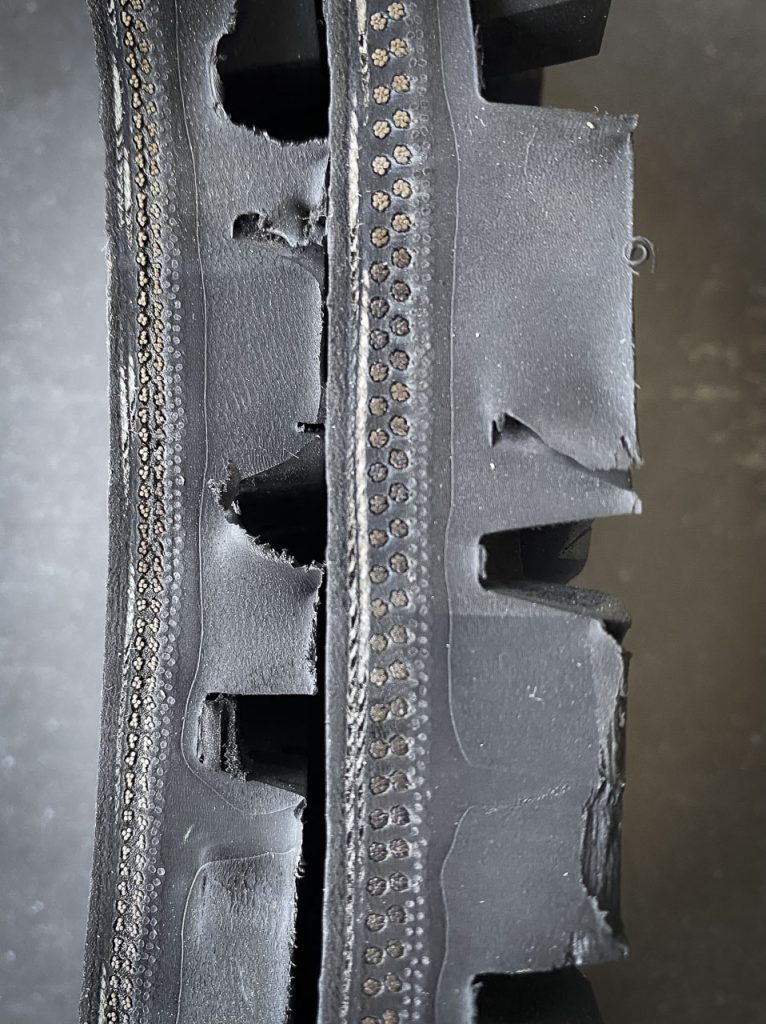
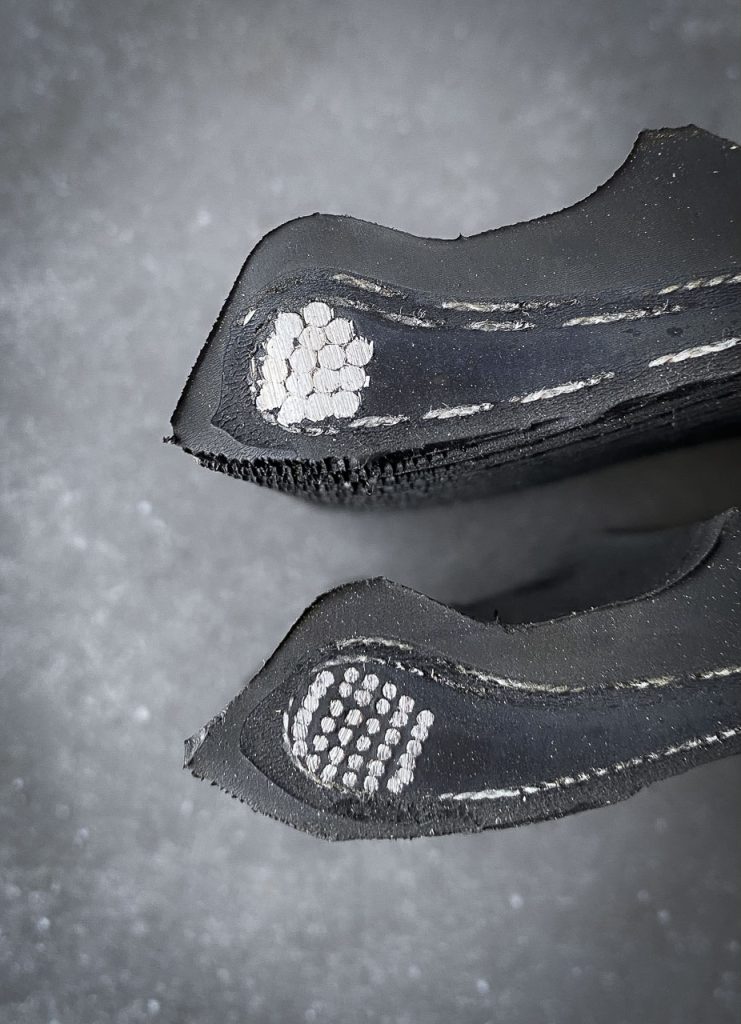
The thickness, or gauge, of the steel cords within the belt and bead construction, are among the more significant differences between an LT and P-metric tyre. This makes the buying process that much harder because one of the key features separating the two is impossible to see without cutting the tyres open. In many respects, you’re essentially buying on good faith. These cross-sections clearly show the heavier-gauge steel construction used in the LT alternative.
There are downsides to all that extra rubber and reinforcement of course. More unsprung weight can affect fuel consumption, ride quality, and suspension performance, particularly if your shocks are already tired.
However, for an off-road-focused 4×4, those compromises are a worthwhile trade-off given the increased durability and load-carrying capability.
And weight is only the beginning.
LOAD
The most significant difference between an LT and P-metric tyre comes down to how much weight each is designed to carry.
Tyres communicate this information in several ways, including load index, load range, and maximum load capacity.
Explaining all the numbers and letters is probably better suited to a separate article, but the important thing to understand is this simple fact: An LT tyre is designed to carry more load than its seemingly identical P-metric sibling. That additional load-carrying capacity is closely linked to the tyre’s ability to safely contain higher inflation pressures.
As we’ve explained in previous tyre articles, the air inside the tyre does much of the heavy lifting. The tyre is essentially the vessel containing that air. Make the vessel stronger, and it can safely contain more pressure and support more weight.
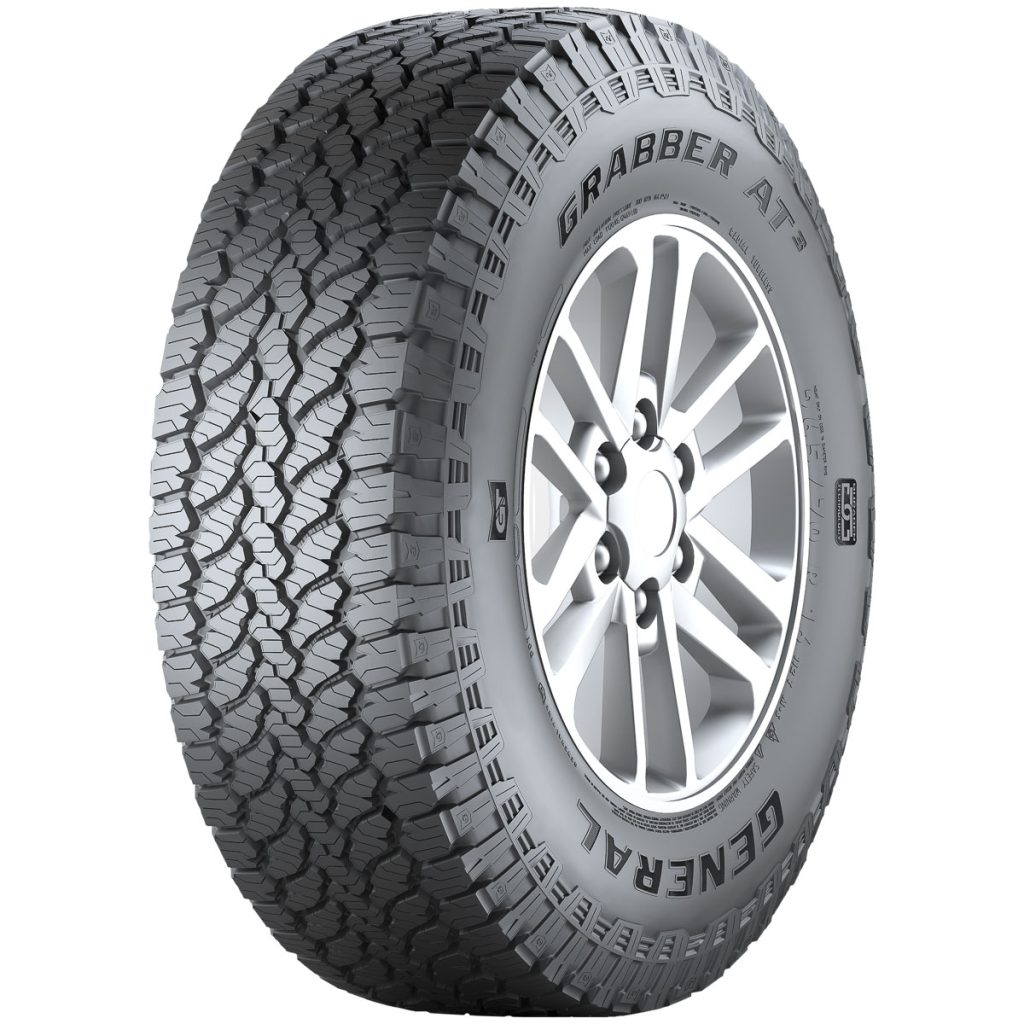
Caption: The General Grabber AT3 is a popular all-terrain in South Africa, making it ideal for our LT versus P-Metric comparison.
Using our General Grabber AT3s as an example, the LT version has a maximum load of 1 450 kg at 5.5 bar, while the P-metric version is rated for 1 120 kg at 3.5 bar.
Of course, these maximum figures aren’t representative of how most of us use our tyres off-road. We’re more likely to reduce pressures for improved comfort, traction, and reduced impact damage.
This is where the LT tyre’s stronger construction becomes particularly relevant.
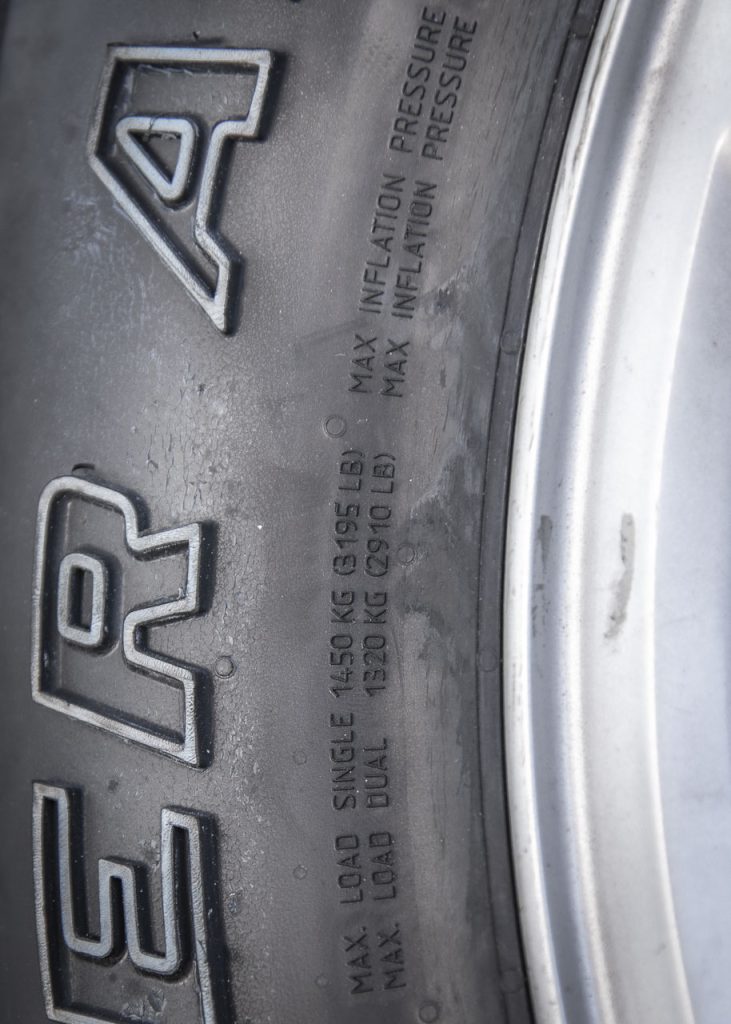
Caption: The tyre’s sidewall tells you exactly how much weight it can carry and, consequently, the maximum pressure it can handle.
HEAT
Heat is one of a tyre’s greatest enemies.
As a tyre deflects, the rubber and casing flex, generating heat. Add a heavy vehicle, a heavy load, low tyre pressures, and a corrugated road, and you have a recipe for significant tyre stress.
A more robustly constructed LT tyre is designed to cope with this punishment better than a P-metric tyre. Its stiffer construction generally means less deflection under load, helping it better manage the heat generated when operating at reduced pressures.
And when you’re hundreds of kilometres from the nearest tyre shop, that additional margin of durability can be worth considerably more than the difference in purchase price.

DEFLATION
If you ever want proof of just how widely misunderstood LT versus P-metric tyres are, look at how many publications, websites, and YouTube channels conduct all-terrain tyre tests without mentioning whether the tyres are LT or P-metric.
It’s a glaring omission.
It’s like comparing a RAV4 with a Land Cruiser but focusing on criteria like economy, manoeuvrability, and comfort. Of course, the RAV4 is likely to come out looking like the better vehicle.
To make matters worse, testers will often compare an LT all-terrain tyre with a P-metric all-terrain tyre at the same inflation pressure.
That methodology can be misleading because the two tyres won’t necessarily behave the same way at the same pressure.
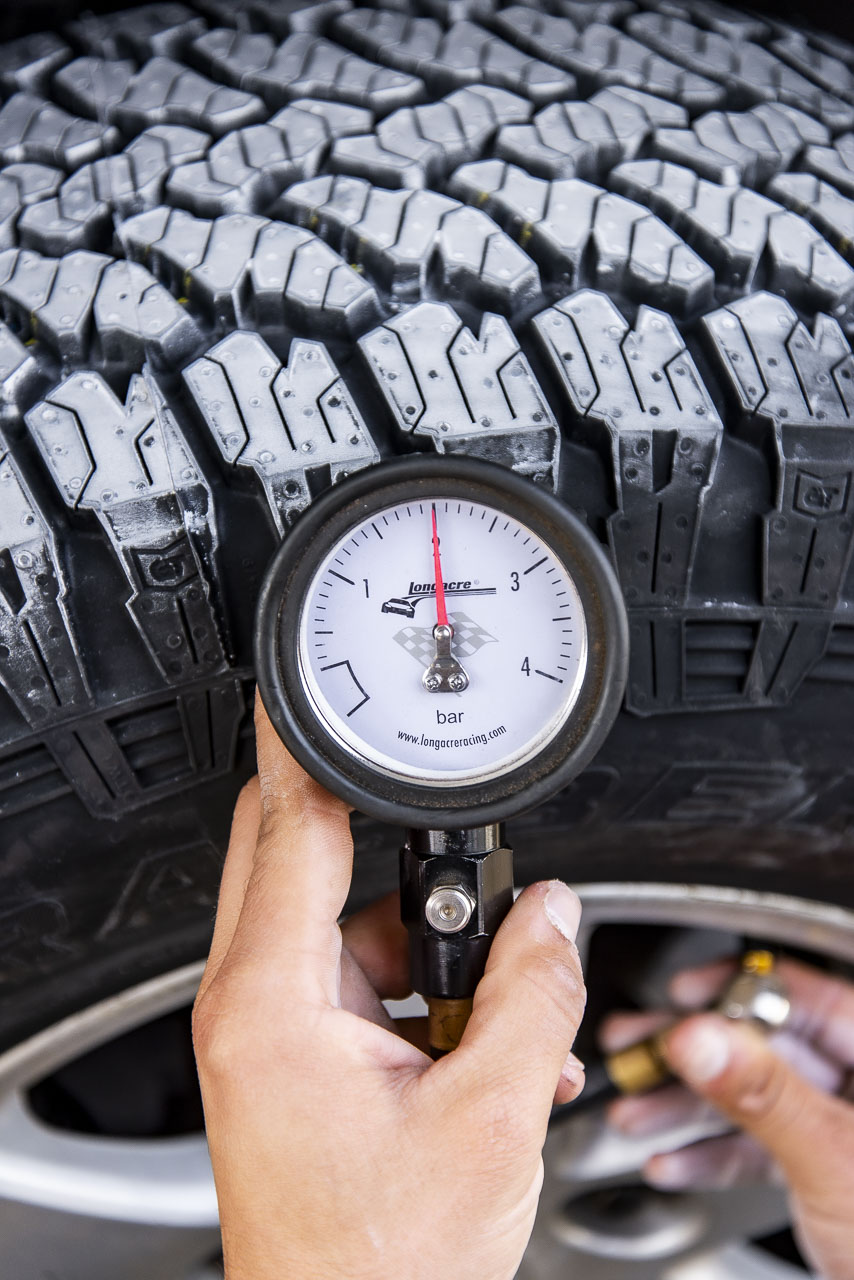
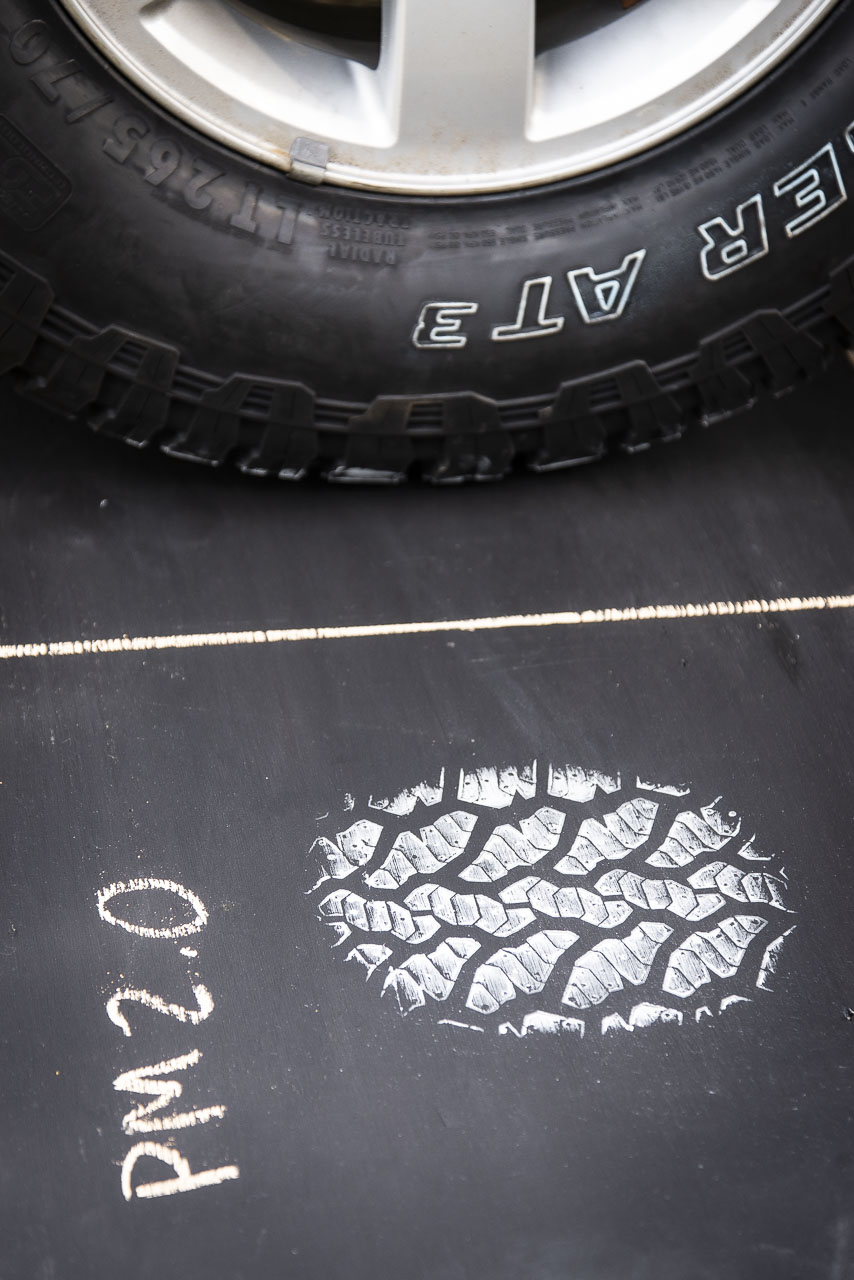
Coming back to our two test tyres, we measured the footprint of both General Grabber AT3s at various pressures. As you can see in the images below, the LT consistently produces a shorter footprint than the P-metric at the same pressure – with the difference varying from approximately 7% to 8%.
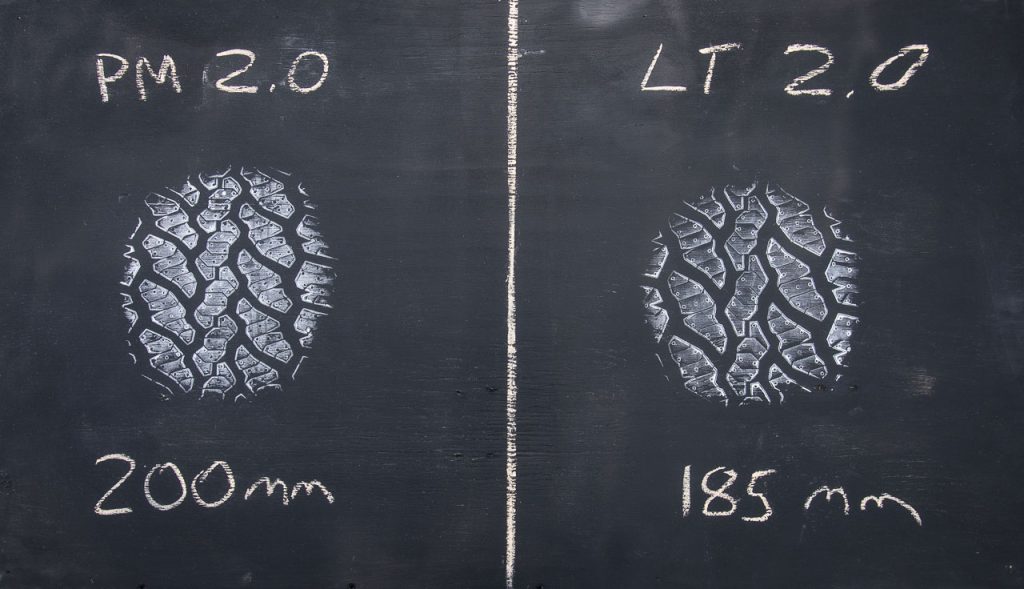
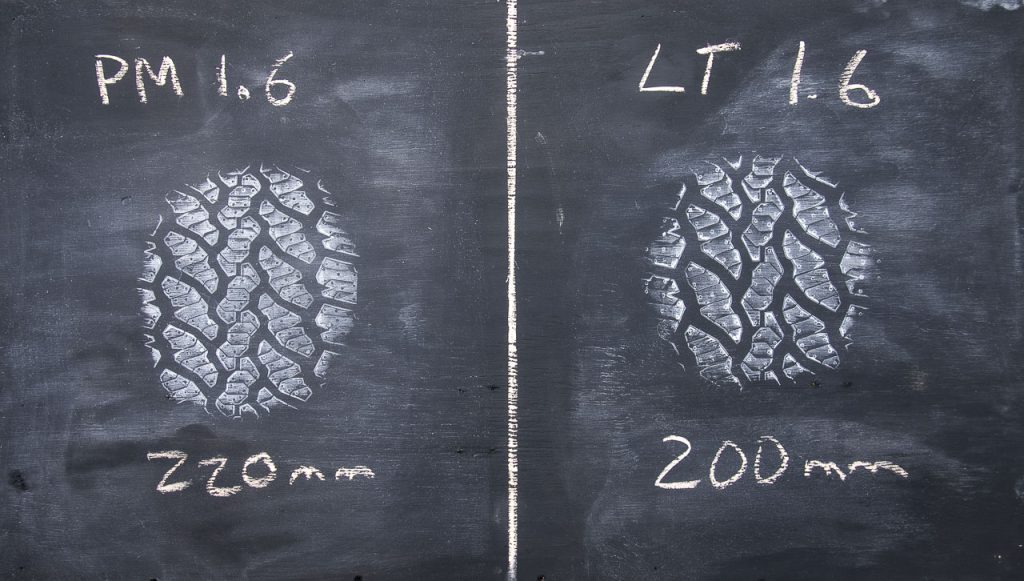
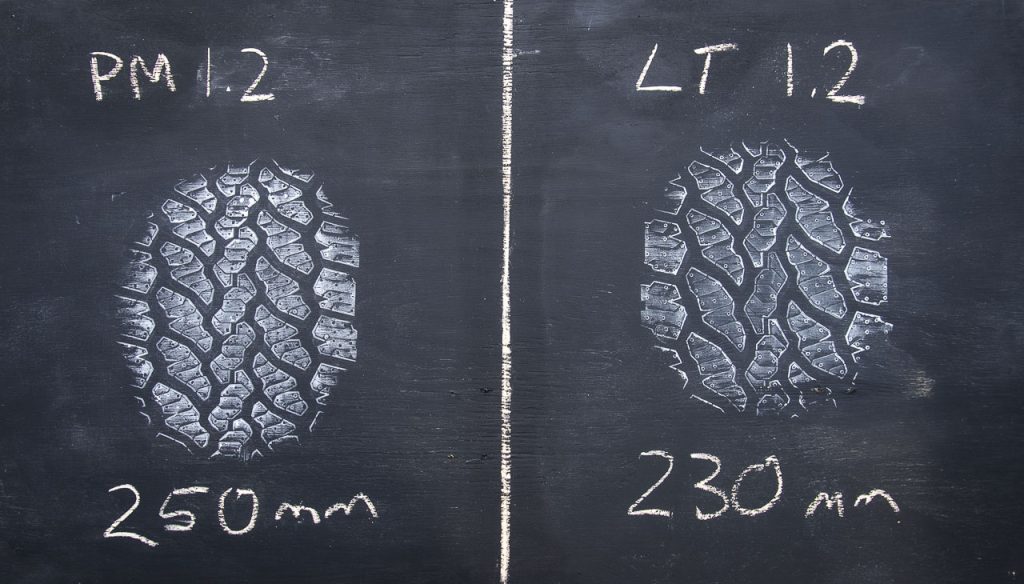
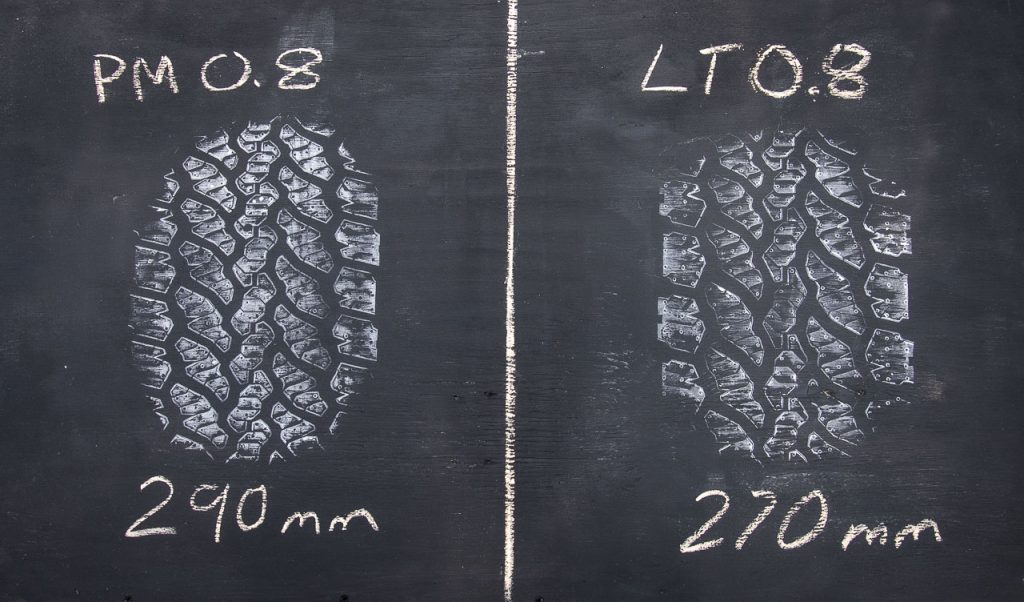
Our deflation test produced consistent results, repeatedly showing that LT tyres require slightly more deflation to achieve a similar footprint length to their P-metric counterparts. Needless to say, conducting an off-road traction test at a predetermined pressure, rather than a matching footprint, could skew the results in favour of the P-metric tyre and make it appear superior — when that’s simply not the case.
If you tested these two tyres in sand at exactly the same pressure, the LT could therefore appear to perform significantly worse than the P-metric.
But is that a fair comparison?
The chosen pressure is somewhat arbitrary. If the objective is to compare the tyres’ ability to produce traction, shouldn’t the test be conducted at the same footprint length rather than simply the same pressure?
The point is that an LT tyre’s stiffer construction means it won’t deform and spread in the same way as a P-metric tyre at a given pressure.
That isn’t necessarily a disadvantage. It simply means the two tyres require different pressures across different applications.
This is one reason why a softer, more pliant P-metric tyre can be attractive to an off-roader who drives a relatively lightweight vehicle almost exclusively in sand. It can produce a larger footprint at a given pressure, while also being lighter, more comfortable, and cheaper to replace.
For a heavily-loaded touring 4×4 that spends its time dealing with corrugations and rocky tracks, the priorities can be very different.
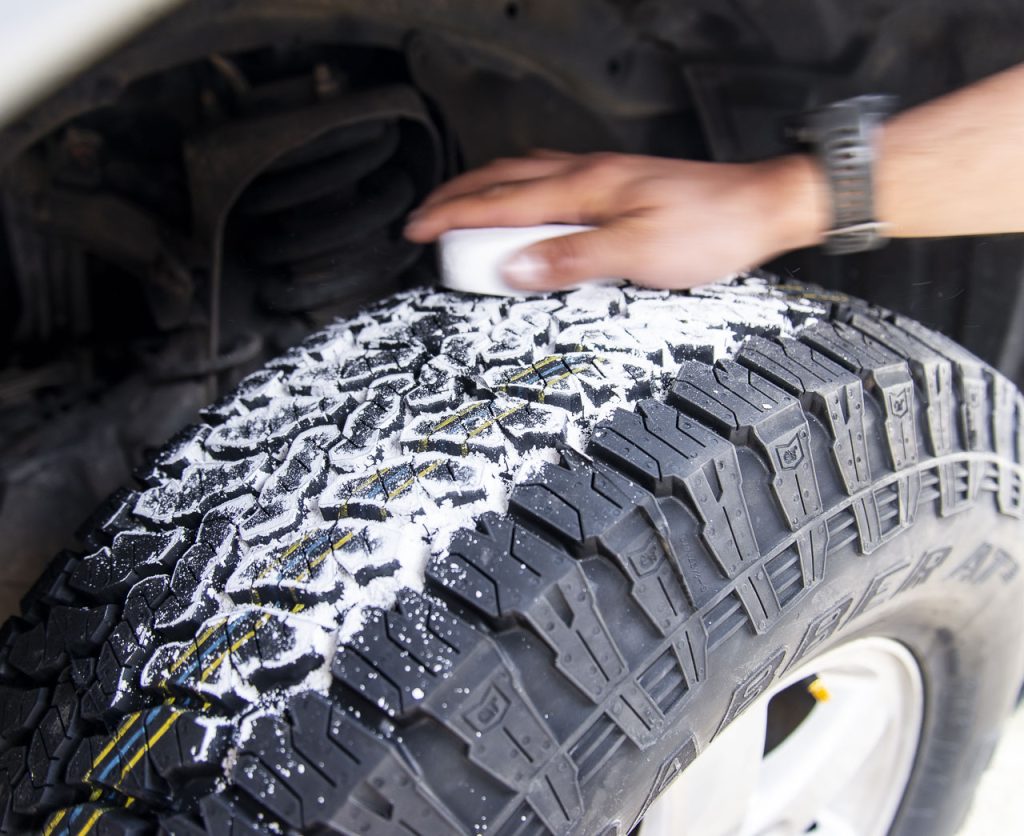
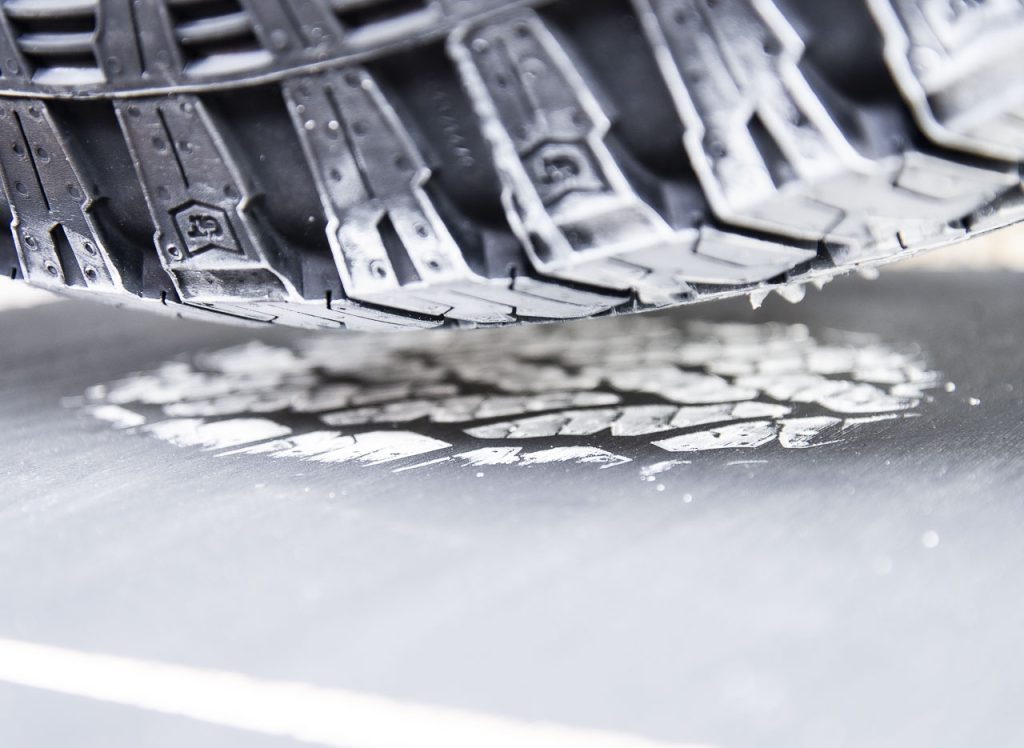
Our testing methodology: Using a block of climber’s chalk, we evenly coated the tread of both tyres before lowering the vehicle’s weight onto a divided blackboard, with the LT on one side and the P-metric on the other. Simple, but it worked.
THE DEALER DEBACLE
The decision between LT and P-metric really isn’t that complicated. If you frequently drive off-road, heavily load your 4×4, travel to remote places, and regularly reduce your tyre pressures, an LT tyre will generally be the more appropriate choice.
The problem is that not every tyre dealer understands this distinction.
There can be a disconnect between what a tyre salesperson thinks the customer wants — the cheapest possible price — and what the customer actually needs: the right tyre for their application.
There are several reasons for this. Tyre sales staff may be incentivised by sales volumes, staff turnover can be high, and many tyre dealers primarily deal with passenger vehicles rather than dedicated off-road applications.
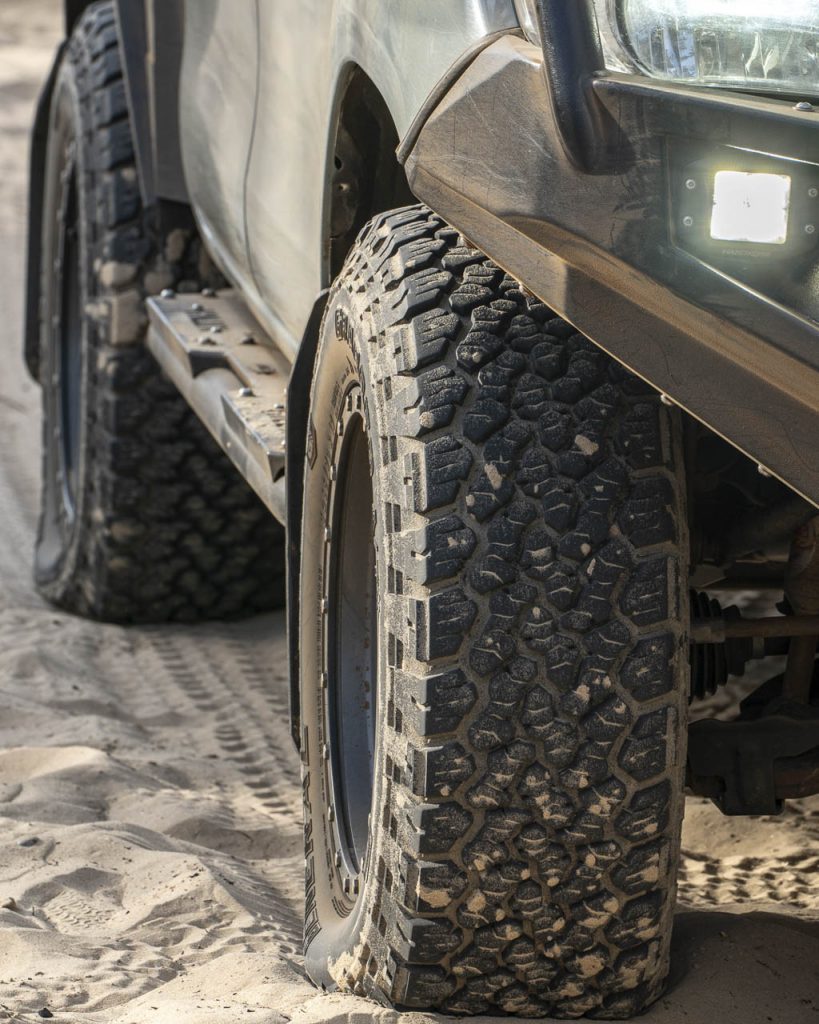
Caption: While it makes sense to shop around for the best possible tyre deal, it makes even more sense to build a relationship with a tyre dealer who understands the demands of off-road applications — and preferably, one who’s a 4×4 enthusiast himself. Photo credit: Roam Overlanding.
That last point is worth highlighting. Much of the misinformation people receive about tyres could be avoided if they bought from a dealer who specialises in off-road tyres — or, better yet, one whose owner or staff are 4×4 enthusiasts themselves.
Ultimately, however, the responsibility still rests with you, the buyer, to understand what you’re buying.
Because if two tyres look identical but one costs considerably more, the cheaper tyre isn’t necessarily the bargain you think it is.
A PERSONAL ACCOUNT
Ed’s Note: Over the years, I’ve lost a fair number of tyres due to sidewall damage. But, interestingly, I’ve never lost an LT tyre.
And, come to think of it, I’ve also never lost a P-metric tyre when I’ve kept that tyre at the vehicle manufacturer’s recommended pressure.
Almost every tyre I’ve lost to sidewall damage has been a P-metric that I deflated.
It seems I’m a slow learner. I probably should have spotted the trend sooner and stopped deflating P-metric tyres altogether. But when you’re 20 km down a badly-corrugated road, the temptation to “just let out a wee bit of air” to make the ride more bearable eventually creeps in.
Then, before you know it, you’re listening to the all-too-familiar sound of air rushing out of a tyre.
That doesn’t mean P-metric tyres are bad. If you primarily stick to gravel roads, rarely deflate, and seldom carry a heavy load, a P-metric tyre will probably serve you perfectly well.
For everyone else, an LT should be at the top of your shopping list.

Caption: I once travelled through Mozambique’s Limpopo National Park in a stock-standard Nissan Patrol fitted with factory P-metric tyres. Eventually, I ran out of tyre plugs and had to borrow some from others in our convoy. It was my first real-world lesson in how the wrong tyre, in the wrong application, can completely dominate a trip.
PRICE
There are no market-related rules governing how LT and P-metric tyres should differ in price, and publishing specific prices here could quickly make this story inaccurate. However, you can expect to see price differences of anywhere from 30% to 50% between two seemingly identical all-terrain tyres.
WHICH ONE SHOULD YOU BUY?
P-METRIC:
Mostly road driving
Lightly loaded
Occasional gravel/off-road
Comfort and fuel economy priorities
Lightweight vehicle
Rarely deflates
LT:
Heavily accessorised vehicle
Regularly carries camping/touring loads
Frequent off-road use
Regularly deflates tyres
Corrugations and rocky terrain
Long-distance/remote travel
Have something to add? We’d love to hear from you. Contact us here.