Authored by Safari Centre Cape Town and Grant Spolander

Your first cross-border 4×4 adventure doesn’t have to involve a heavily modified vehicle, an expensive collection of accessories or years of off-road experience. In fact, the secret to a relaxing Namibian holiday may lie in knowing what you don’t need.
There’s something about planning a cross-border 4×4 adventure that makes even the most seasoned 4×4 owner question their vehicle’s readiness.
Suddenly, everything is up for debate: Is my fridge too small? Does my battery need upgrading? Do I need more solar power? And should I finally fit that bull bar and winch I’ve been contemplating?
It’s an understandable reaction. Holidays cost time and money, and the pressure to get everything right is palpable.
But there’s a tipping point between being adequately prepared and creating so much stress that you need a holiday from your holiday.
To understand where that point lies, we first need to recognise that Namibia isn’t one “type” of adventure.
Namibia isn’t one destination
For South Africans planning their first cross-border 4×4 holiday, Namibia is arguably one of the best places to start.
The currency is familiar, the tourist infrastructure is well established, and many of the country’s most spectacular attractions can be reached without tackling overly demanding terrain.
But not all Namibian adventures are created equal.
There’s a considerable difference between touring southern and central Namibia’s established gravel roads and venturing into the remote north-west, where distances between services can be substantial and self-sufficiency takes on an entirely different meaning.
Likewise, dedicated dune-driving adventures introduce their own requirements in terms of vehicle capability, recovery equipment and driver experience.
For this guide, we’re concentrating on the type of holiday most first-time visitors are likely to undertake: exploring Namibia’s established touring routes, from the Fish River Canyon and Sossusvlei to Lüderitz, Walvis Bay and even Etosha.
It’s a journey dominated by vast landscapes, long gravel roads, established campsites and relatively accessible attractions. And the preparation required is considerably less complicated than many people imagine.
How much 4×4 do you really need?
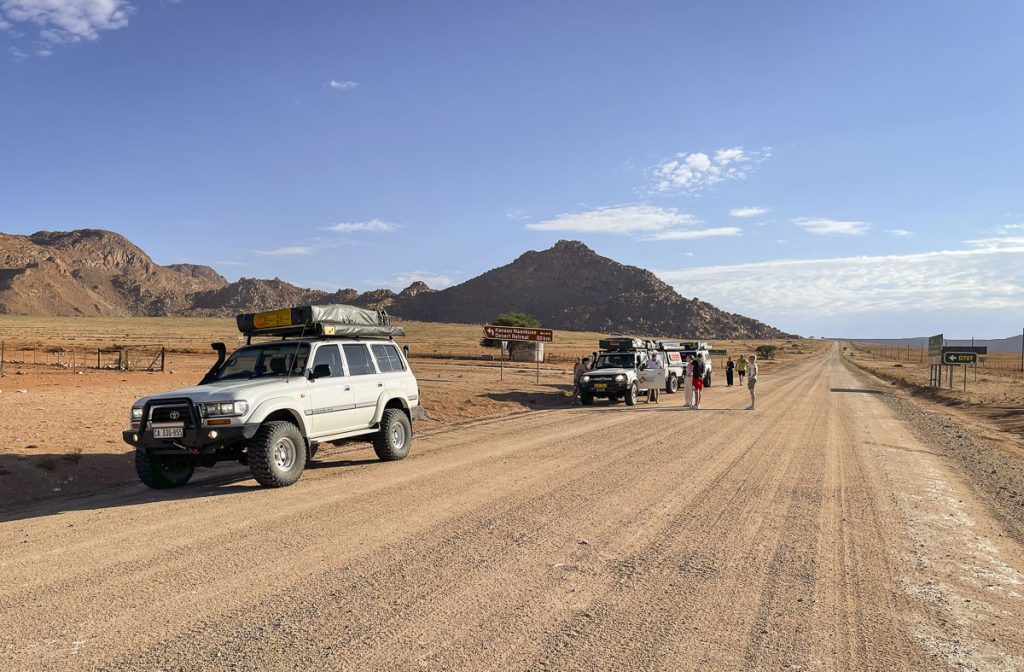
Here’s a potentially unpopular opinion: for most established Namibian touring routes, a standard 4×4 is more than adequate.
You don’t necessarily need aftermarket suspension, a bull bar, extensive recovery equipment or even a dual-battery system.
In fact, depending on your itinerary, you probably won’t need to engage low range at all.
That’s not to say these accessories don’t have value or can’t be justified. But their absence isn’t reason enough to delay a holiday you’re almost certain to enjoy regardless.
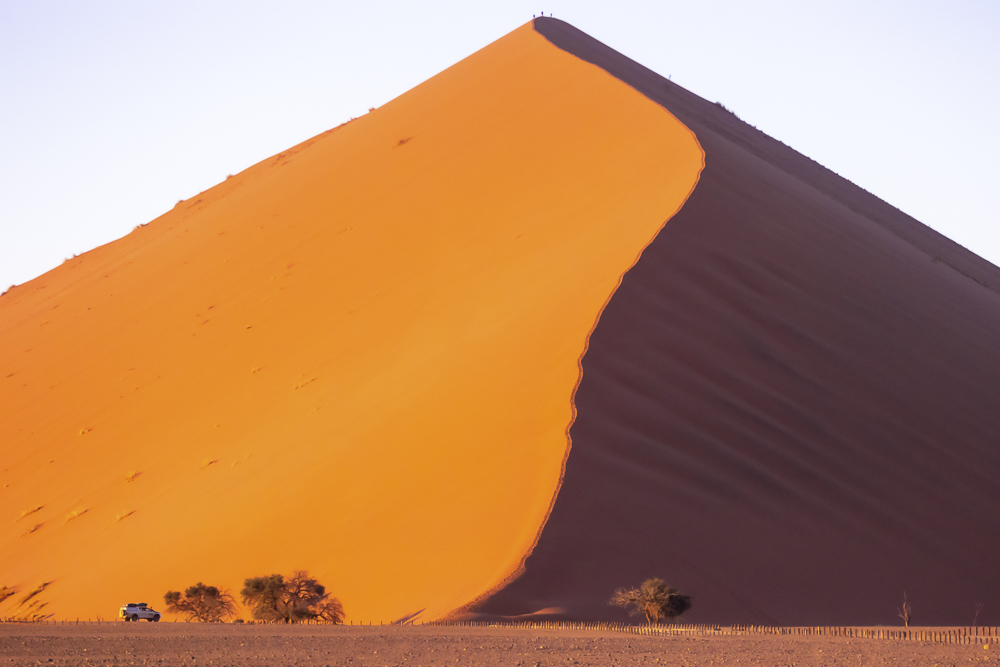
Caption: Standing 170 metres high, Dune 45 is one of the most photographed dunes in the world. Although almost any vehicle can reach its base, continuing towards Deadvlei requires a 4WD, as the final stretch becomes increasingly sandy. Image credit: Thomas Roell
Of course, if a particular modification forms part of a broader, long-term plan for your vehicle and future cross-border travel, Namibia is a great place to test your equipment and refine your touring setup.
For now, however, we’re focusing on what you’re most likely to need, along with a few non-negotiables. Starting with…
Tyres: the foundation of your Namibian holiday
From a technical perspective, tyre management should be one of your biggest priorities, both before and during the trip.
Appropriate tyre pressures can improve ride comfort and reduce the punishment of corrugated roads, but the correct pressure depends on tyre construction, vehicle load and travelling speed.
Southern and central Namibia aren’t particularly demanding in terms of vehicle capability, but extended gravel-road travel brings a real risk of punctures and irreparable tyre damage, particularly when heavily loaded.
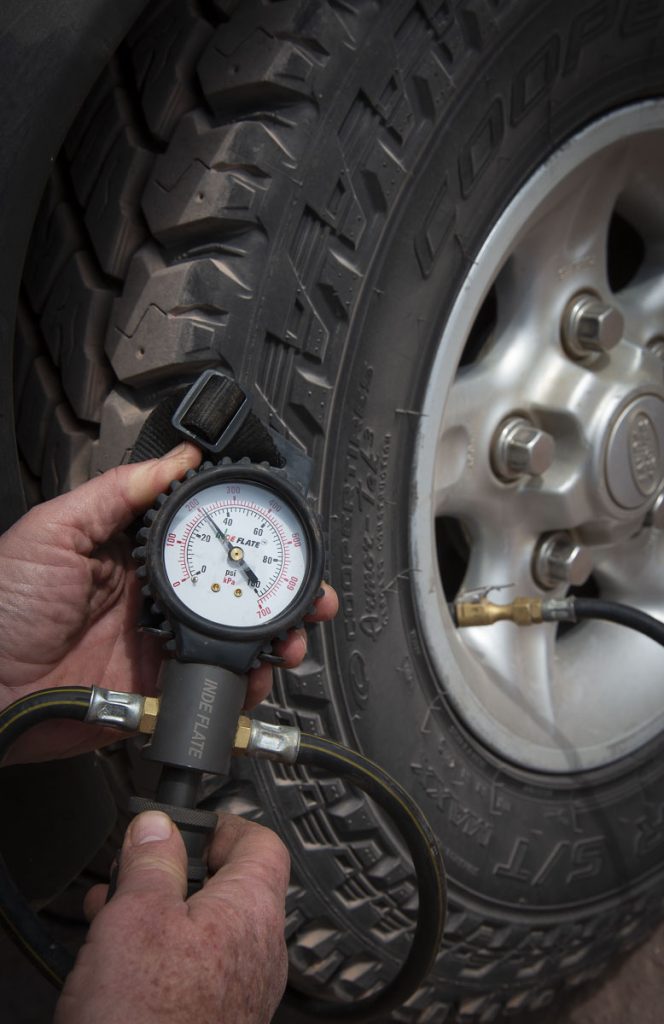
Caption: From a technical perspective, touring southern and central Namibia is largely about tyre management, both in terms of adjusting pressures to suit road conditions and monitoring for punctures.
Beware of blowouts
A straightforward tread puncture can often be repaired, provided you have the essentials: a compressor, functioning jack, wheel-changing tools and a suitable puncture repair kit.
But losing a tyre completely is another matter.
One common cause of irreparable tyre damage is an undetected puncture. As the tyre loses pressure, its sidewalls flex excessively and generate heat. If driven far enough while severely underinflated, the tyre can also become trapped and damaged between the wheel rim and the road surface, eventually causing the sidewall to fail.
Rear-tyre punctures can be particularly difficult to detect because they don’t immediately affect steering feel. On a long, straight Namibian gravel road, a driver might not notice the problem until the tyre is beyond repair.
This is why a Tyre Pressure Monitoring System (TPMS) is worth serious consideration. An early warning can mean the difference between plugging a puncture and replacing an entire tyre.
Even without a TPMS, regularly checking your tyres and adjusting your mirrors to keep an eye on the rear wheels can help.
Of course, pressure management is only effective if you’re willing to make adjustments when conditions change.
If your compressor is buried beneath a mountain of camping equipment, you’re less likely to use it. That’s when people postpone reinflating their tyres until the next fuel stop, rather than stopping before driving at higher speeds on hot tar.
A reliable pressure gauge and easily accessible compressor are among the most useful pieces of equipment you can carry.
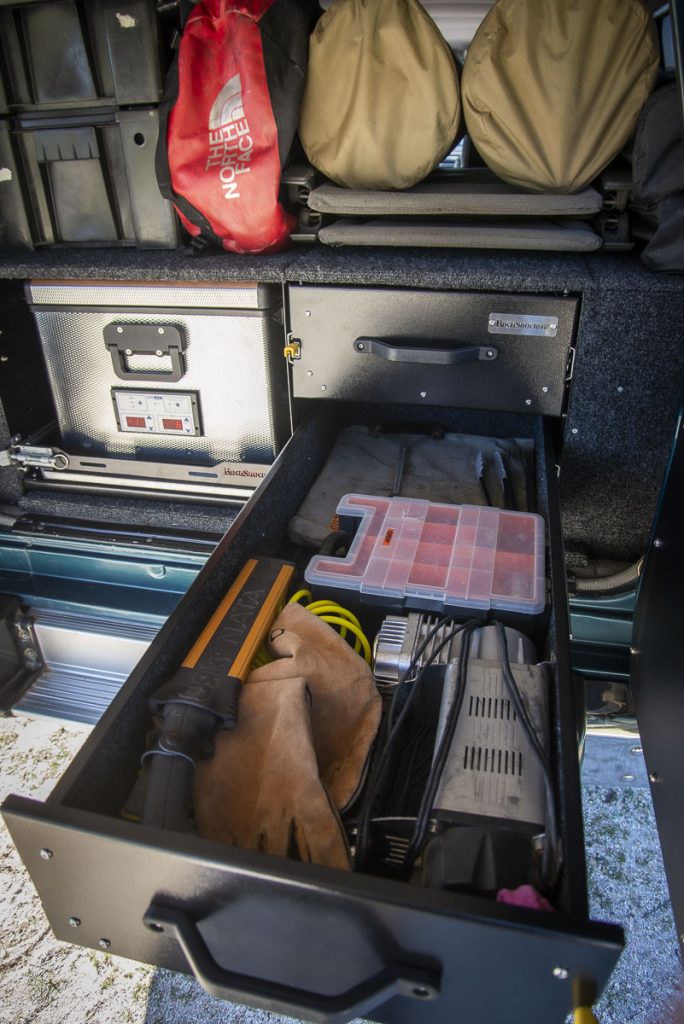
Caption: Keeping your compressor, pressure gauge and tyre-repair kit easily accessible is an important part of packing for Namibia. If they’re buried beneath your luggage, you’re far less likely to use them when needed.
Ditch the old rubber
It’s tempting to squeeze one more holiday out of a set of all-terrains, particularly when there’s still a reasonable amount of tread remaining.
But if your tyres are approaching replacement, consider fitting new ones before the trip rather than afterwards.
Aside from traction and safety considerations, reduced tread depth can also leave tyres more vulnerable to certain types of puncture damage.
Do you need a second spare?
For remote expeditions, an additional spare wheel can provide valuable insurance. But on established southern and central Namibian touring routes, a second spare isn’t automatically essential.
Much depends on the condition and construction of your tyres (see our LT versus P-Metric feature here), the roads you’re planning to travel and how far you’ll be from assistance.
A serviceable spare, reliable jack, appropriate wheel-changing tools and puncture repair kit are generally a sensible starting point.
Just make sure everything works before you leave, including your ability to remove and refit a wheel on uneven terrain.
Dust: the problem you can’t avoid
You may not encounter deep mud, steep rocky climbs or serious recovery situations, but you can be reasonably certain of one thing: you’re going to encounter dust.
Lots of it.
For double-cab owners, this deserves particular attention. A poorly sealed load bin can turn an enjoyable holiday into an ongoing battle to keep clothing, bedding and food clean.
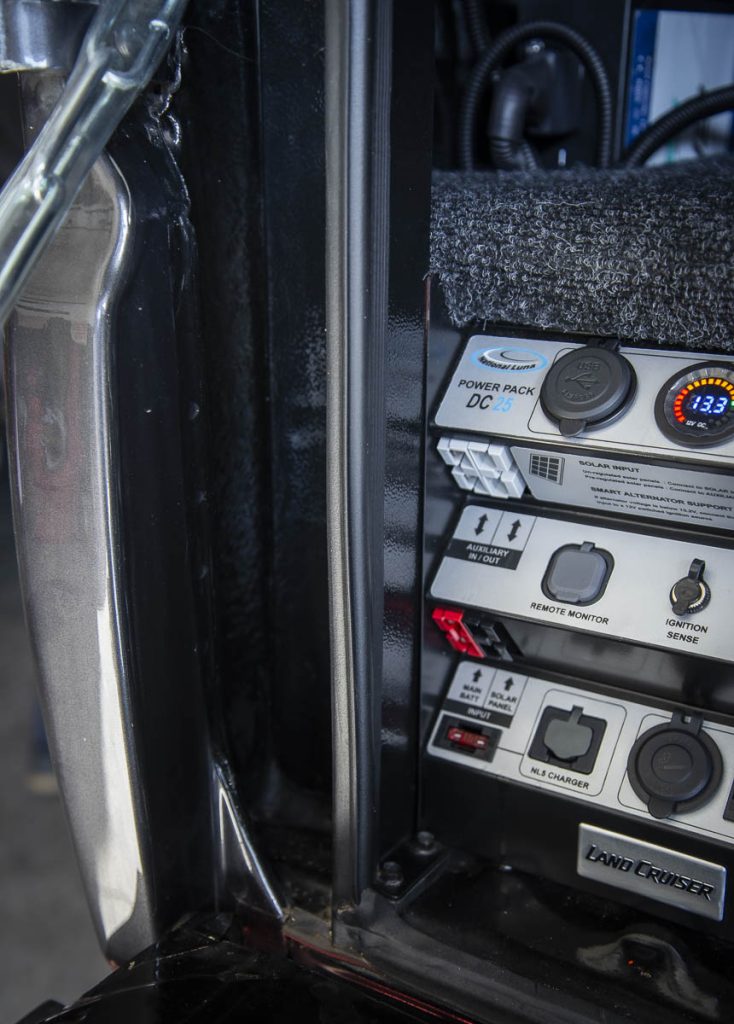
Caption: If you own a double-cab, investing in a dust-sealing kit before your Namibian adventure is a decision you’ll be thankful for, particularly after hundreds of kilometres on dusty gravel roads.
A well-sealed canopy is a good starting point, while dedicated dust-sealing kits and suitable canopy pressurisation systems can provide additional protection.
Sealed storage boxes offer another layer of defence, particularly for sensitive equipment and clothing.
Dust management isn’t particularly glamorous, and it won’t make your vehicle look more capable, but it can make a substantial difference to your travelling experience.
The fridge and battery question
Few subjects generate more discussion among overlanders than refrigeration and battery systems.
Lithium batteries, DC-to-DC chargers, solar panels, inverters and dual-compartment fridge/freezers can all form part of an excellent touring setup.
But do you actually need all of them?
For a typical Namibian holiday following established tourist routes, probably not.
Consider how your journey is likely to unfold.
Established towns such as Lüderitz, Windhoek and Swakopmund may form part of your itinerary, meaning there’s a good chance you’ll be staying in lodges or campsites with electricity between more remote destinations.
In that scenario, your battery system doesn’t necessarily need to support a fridge indefinitely. It simply needs to provide enough power between charging opportunities.
A modest auxiliary battery or suitably sized portable-power pack could be sufficient.
Just bear in mind that a fridge operating in Namibia’s summer heat can consume considerably more energy than the same fridge in mild conditions.
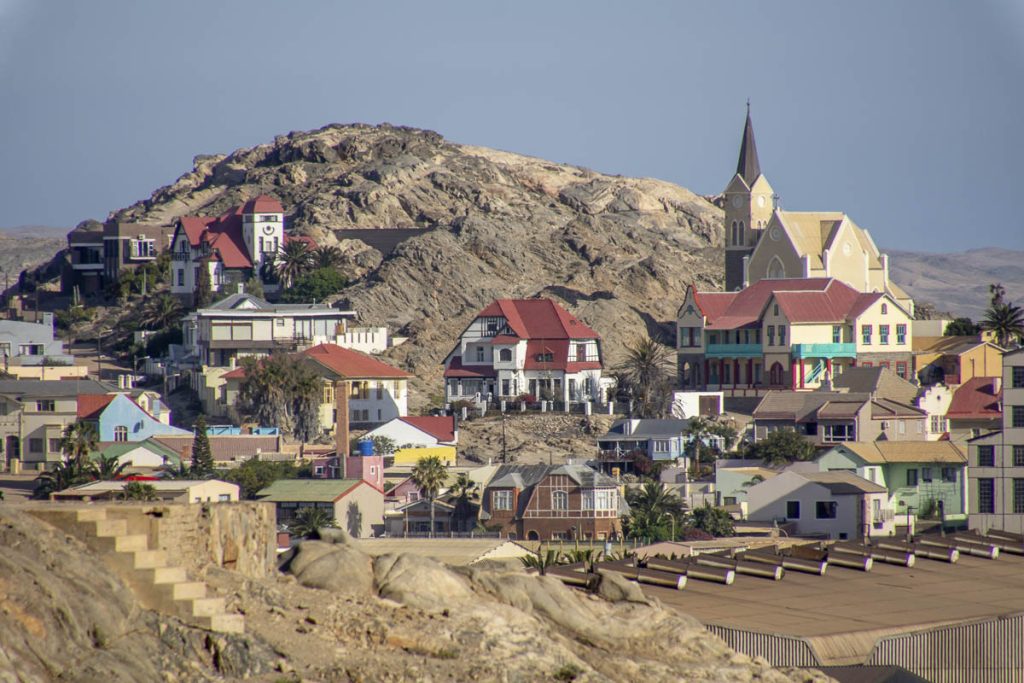
Caption: Most first-time Namibian itineraries include towns such as Lüderitz, pictured here, where you can regularly replenish supplies. This reduces the need to carry excessive food, refrigeration capacity or battery power for extended periods of self-sufficiency. Image credit: Aurelien CHARRIER
Bigger isn’t always better
The same logic applies to refrigeration.
A 40 to 60-litre single-compartment fridge may be perfectly adequate for many travellers, particularly when food can be replenished along the route.
You don’t necessarily need a large dual-compartment fridge/freezer or enough refrigerated storage to carry three weeks of groceries. In fact, food-import restrictions may influence what you can bring across the border in the first place, particularly certain meat and dairy products.
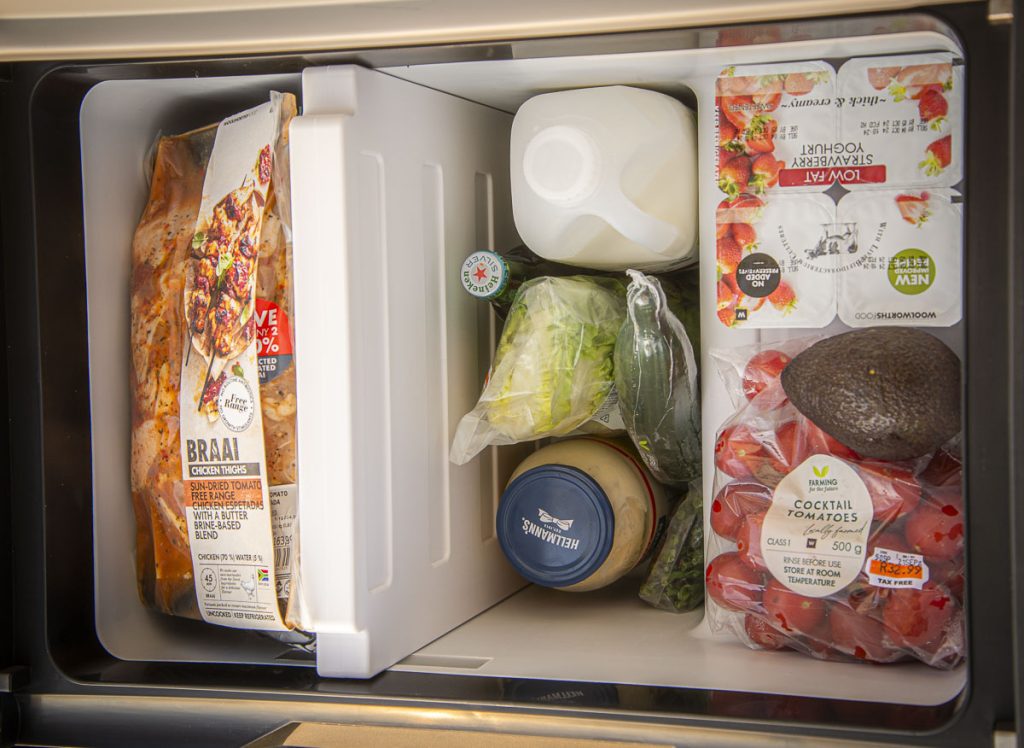
Caption: A 40 to 60-litre fridge will generally be sufficient for most first-time visitors exploring Namibia’s established southern and central touring routes, particularly when opportunities to restock are relatively frequent.
The important consideration is how frequently you’ll have opportunities to restock, rather than how much food you can carry from home.
And remember, a smaller fridge generally means less weight, less space occupied and potentially lower power consumption.
Pack for the journey, not just the destination
There’s an aspect of vehicle preparation that receives surprisingly little attention, despite having an enormous influence on how enjoyable a holiday becomes.
Packing.
Not simply how much equipment you can squeeze into your vehicle, but how easily you can access it.
Namibia is a country of enormous landscapes. Much of the enjoyment comes from the journey itself: stopping beside the road, admiring a mountain range, making coffee in the shade or preparing lunch with a view that stretches to the horizon.
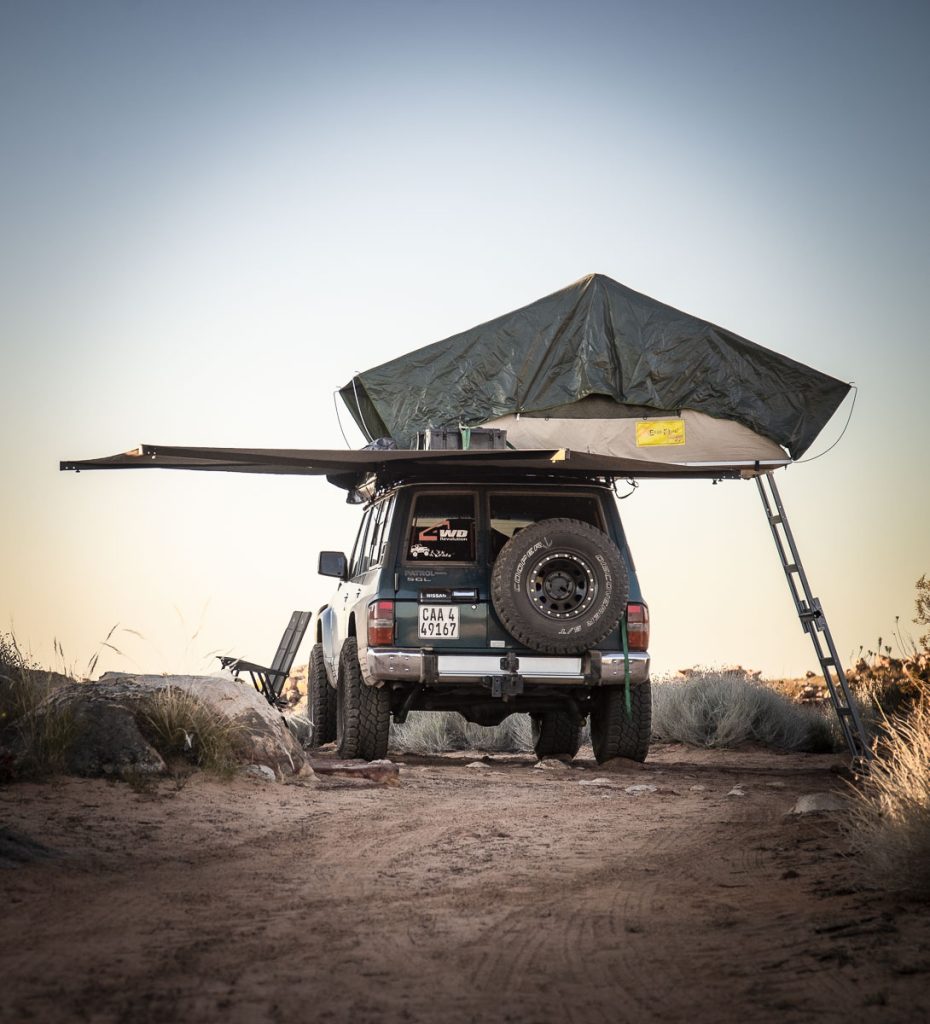
Caption: Natural shade can be hard to find in Namibia, but spectacular scenery certainly isn’t. An easily deployed awning is a valuable accessory, allowing you to stop beside the road, escape the sun and make the most of those unforgettable views.
But here’s the problem.
If stopping for coffee involves unpacking half the vehicle to find the kettle, moving three bags to reach the fridge and digging beneath the bedding to retrieve a chair, you’re eventually going to stop bothering.
You’ll drive past another spectacular viewpoint because the effort of unpacking simply isn’t worth it.
And that’s a shame, because those spontaneous stops are often among the most memorable parts of a road trip.
Accessibility beats complexity
You don’t necessarily need an expensive drawer system to organise your vehicle effectively.
You simply need to think carefully about what you’ll use most frequently.
Your fridge should be accessible without moving other equipment. Chairs and tables should be easy to retrieve. Coffee-making equipment, drinking water and snacks should have designated places.
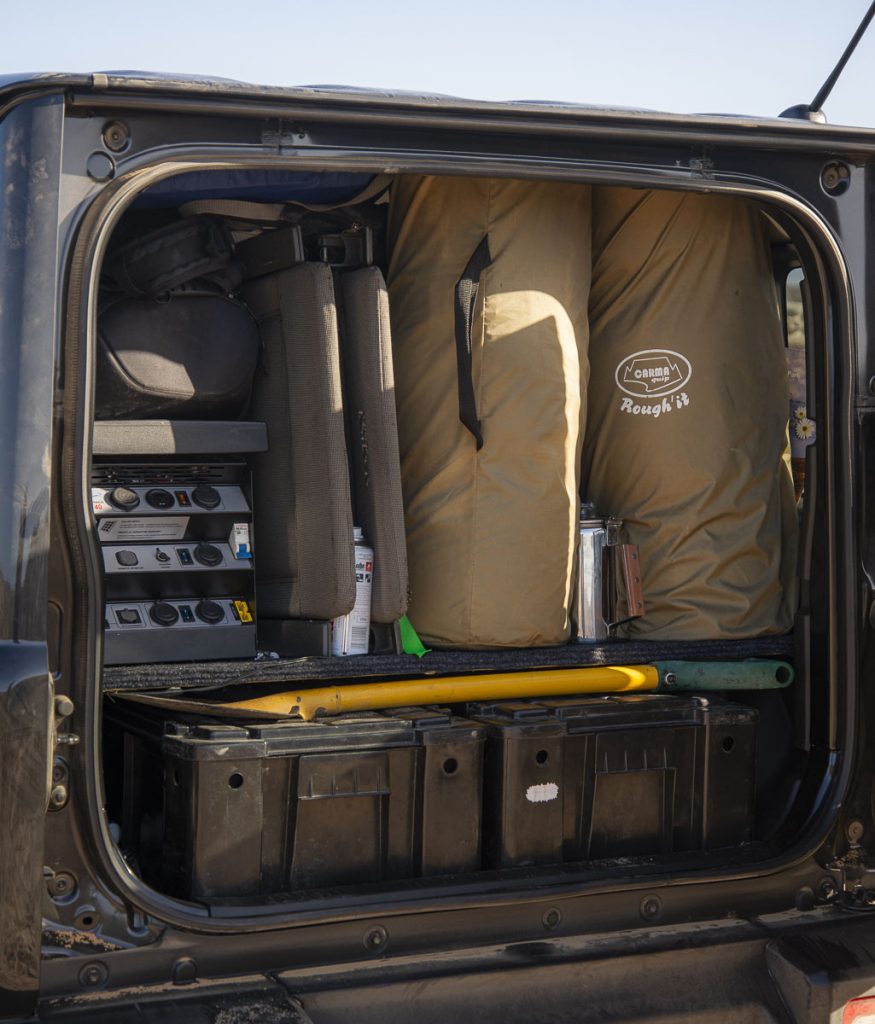
Caption: A fancy drawer system isn’t essential for a successful trip, but smart packing is. Make sure your chairs, food, drinks and coffee-making equipment are easy to access, unpack and repack whenever the opportunity arises.
An awning that can be quickly deployed is particularly useful in Namibia, where natural shade is often scarce.
Likewise, a roof rack may prove valuable for carrying a table, chairs or camping equipment, even if you don’t need it for recovery gear or additional fuel.
The objective isn’t to carry more gear. It’s to make the gear you already have easier to use.
Corrugations: the MERCILESS EQUIPMENT killer
While Namibia’s gravel roads may not demand advanced off-road driving skills, they can be surprisingly hard on a vehicle.
Long stretches of corrugations test suspension components, roof racks, brackets and accessories. Even a minor loose fitting can develop into a serious problem if ignored.
Before departure, ensure your vehicle has been serviced and any existing rattles or mechanical concerns have been investigated. During the trip, make a habit of stopping periodically to check your tyres, inspect roof-rack mounts and look for anything that’s worked loose or isn’t strapped down. A bouncing fridge is a soon-to-be broken fridge.
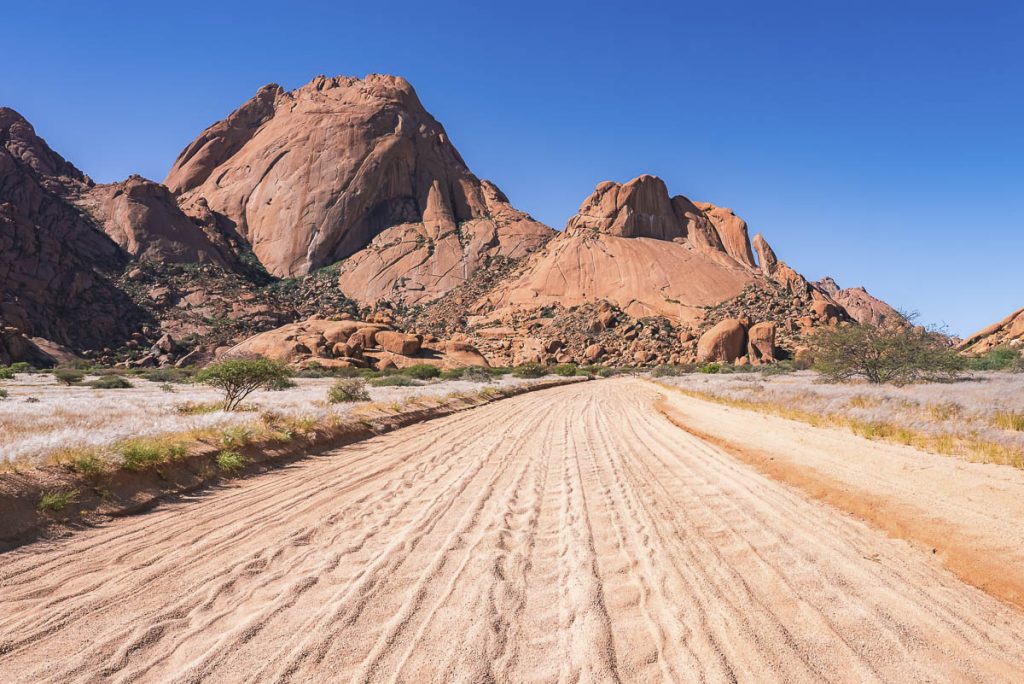
Caption: Dusty, corrugated roads will be among your biggest challenges. Secure your equipment and watch for unwanted rubbing, as prolonged vibration can wear through interior trim, paintwork and even luggage. Inexpensive foam from a hardware store can help protect contact points and prevent unnecessary damage. Image credit: NorthSky Films
Finally, don’t underestimate the value of local knowledge. Chatting to fellow travellers at campsites and lodges can provide invaluable information about road conditions and alternative routes.
A road that was perfectly manageable a month ago may have deteriorated after bad weather, while another may have recently been graded.
A five-minute conversation could save you hours of uncomfortable driving.
The real meaning of being prepared
It’s easy to measure vehicle preparation by the number of accessories fitted.
A bigger fridge, more batteries, upgraded suspension and additional storage can all create the impression that a vehicle is better prepared for adventure.
And sometimes, that’s exactly what they achieve.
But preparation isn’t about how much equipment you own. It’s about understanding the demands of the journey and making sure your vehicle, equipment and experience are appropriate for the task.
For a first-time Namibian adventure, that may mean spending less money on modifications and more time inspecting your tyres, servicing your vehicle, planning your route and organising your luggage.
It may mean choosing a smaller fridge, a simpler battery setup or a comfortable campsite instead of carrying everything required for a month in the wilderness.
And it may mean accepting that the most memorable moments of the holiday won’t involve testing your vehicle’s capabilities at all.
They’ll involve stopping beside a dusty gravel road, unfolding a chair, making a cup of coffee and enjoying a landscape unlike anything you’ve seen before.
After all, the point of preparing your vehicle for an adventure isn’t to spend more time thinking about the vehicle. It’s to spend less.