Words and pictures by Moritz Wernli
On friendship, empty spaces, and crossing the line into the unknown
“Morocco isn’t real Africa.”
We heard that sentence more than once on the road. And, if we are honest, we used it ourselves from time to time. Morocco is too developed, too easy, too connected to Europe. Too many European campers spend their winters along the coast. Too many roads are paved. Too many things simply work.
But the longer we stayed, the less relevant that distinction became.
If there was one thing we had already learned on this journey, it was that the point was not to reach some imaginary definition of “real Africa”. The point was to be where we were. To enjoy the days we had. To take the road as it came rather than constantly measuring it against what was still ahead.
And Morocco made that easy.
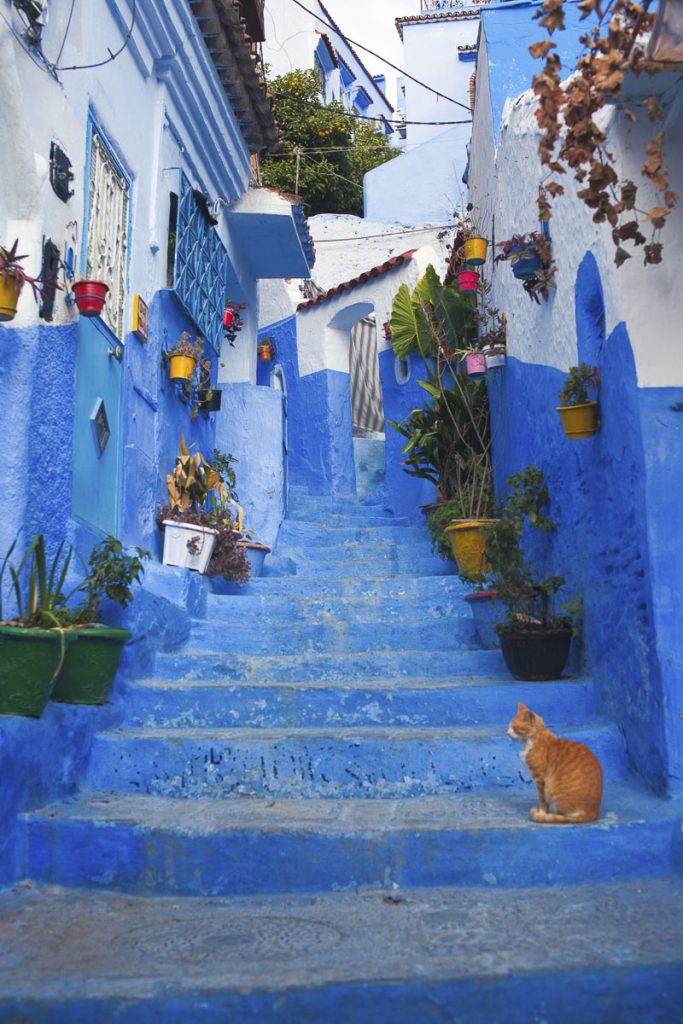
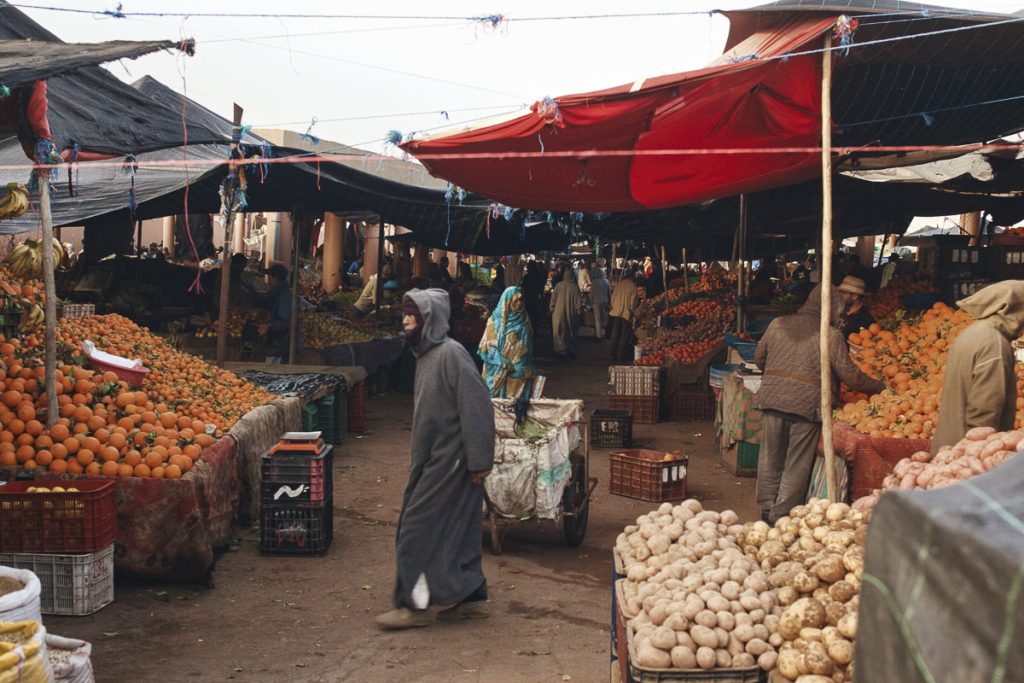
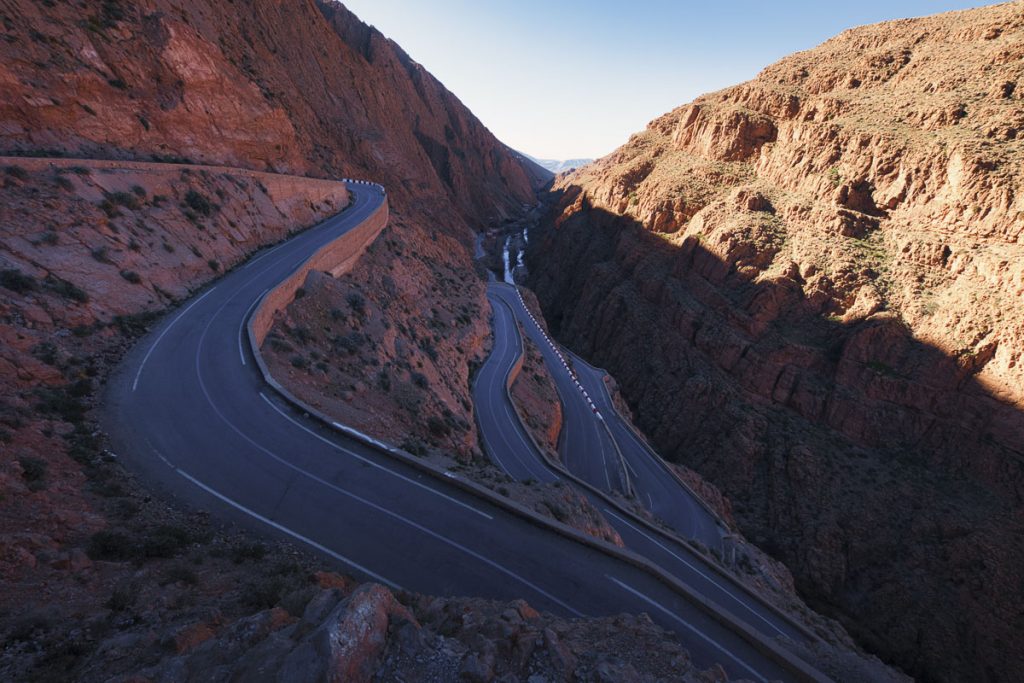
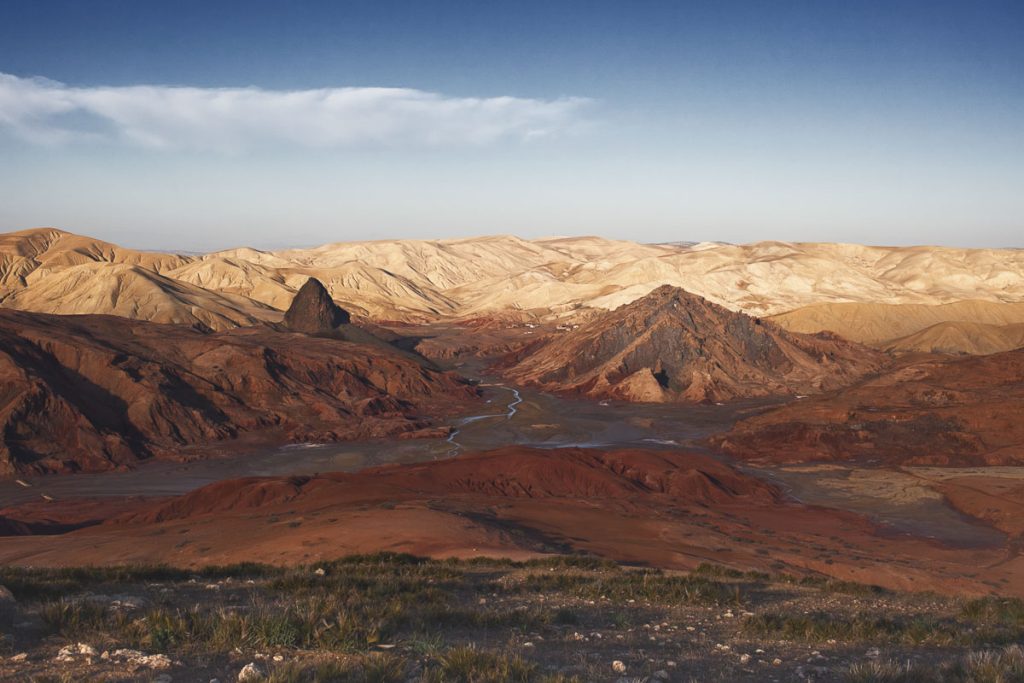
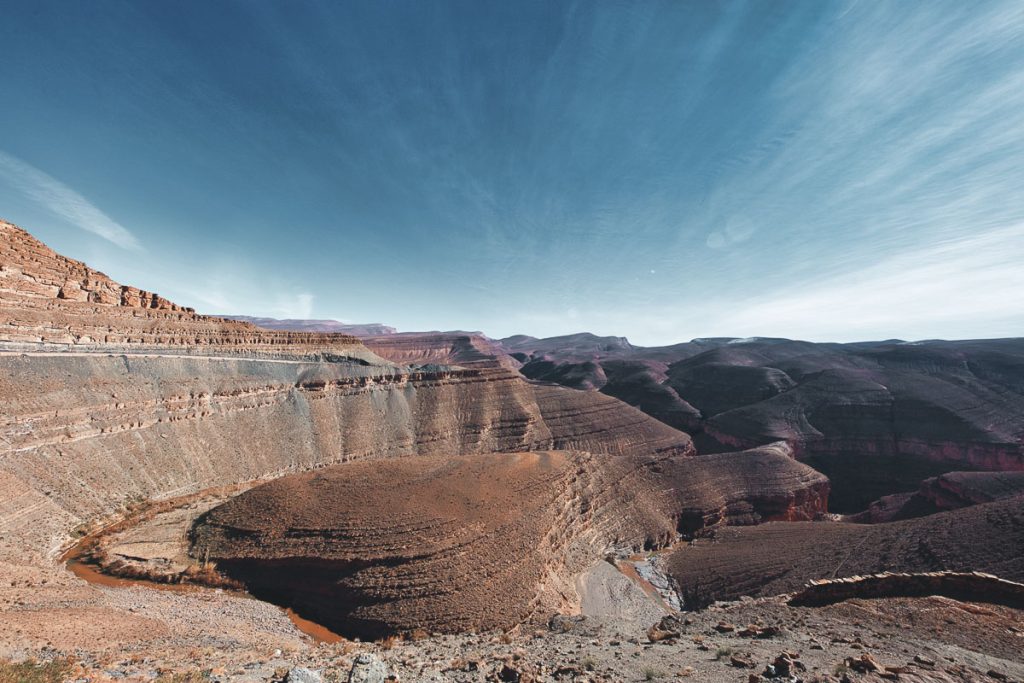
It is an extraordinary country. Mountains rise abruptly from the landscape, giving way to vast, barren deserts. Along the Atlantic coast, long beaches and small fishing villages stretch beneath cliffs, with waves rolling in almost every day. It was wild enough to feel like an adventure, yet accessible enough to let us slow down and simply enjoy it.
And there was another reason to slow down.
Our first fixed point after entering Africa was Essaouira. Friends were coming to spend New Year’s Eve with us.
After months of travelling as a pair, having familiar faces suddenly appear on another continent felt strangely special. We explored the city together, ate far too much, shared stories from the road and celebrated the beginning of a new year somewhere between the Atlantic and the desert.
It reminded us of something easy to forget when travelling for a long time: friends are incredibly valuable.
They bring a different energy into everyday life. Conversations become longer, meals more enjoyable, and even ordinary moments somehow feel richer. When our friends eventually left, the silence inside Balu felt different.
For a while, it felt almost empty.
We had become so used to travelling as a pair that having other people around had reminded us how much we enjoyed sharing stories and everyday life. Suddenly, we had to get used to our little two-person world again.
Fortunately, Morocco had something else waiting for us.
It was time to take Balu properly off the beaten track.
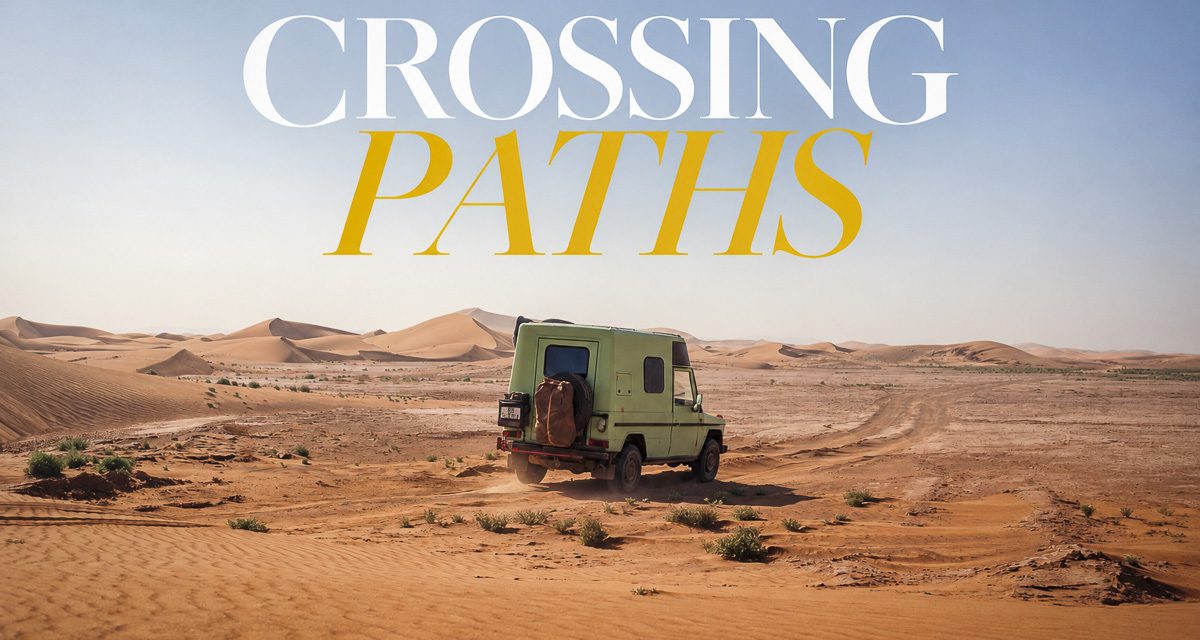
For three days and two nights, we headed into the Erg Chegaga, one of Morocco’s great sand seas, travelling deeper into the desert until we were close to the Algerian border. There were no campsites, no restaurants and very little sign of civilisation. Just dunes, tracks and an enormous sky.
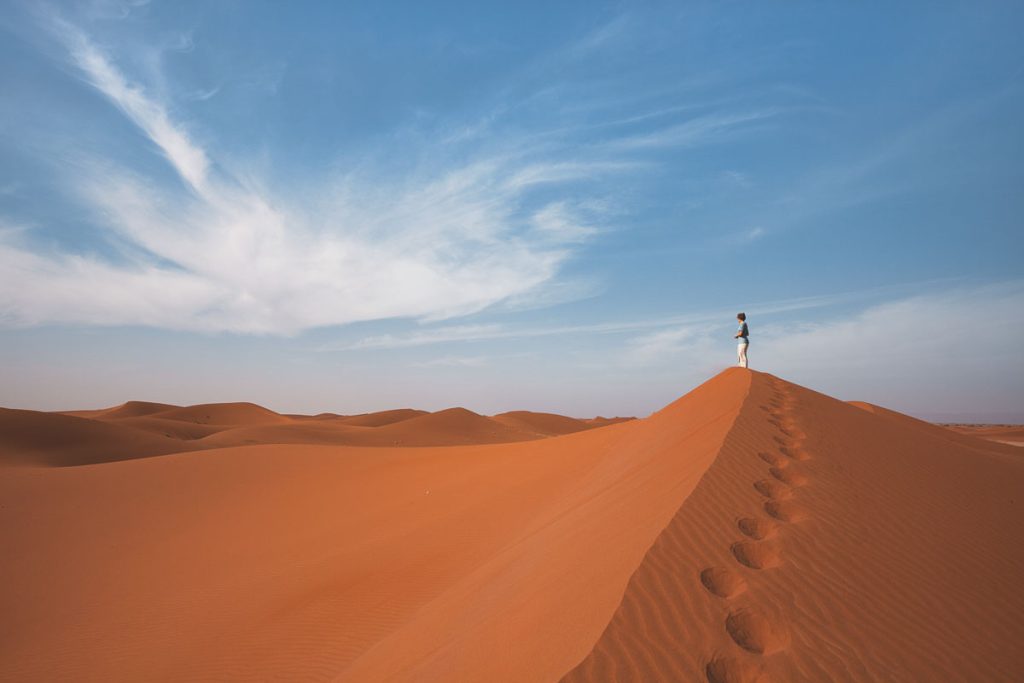
For the first time on the journey, Balu really had to work.
The soft sand swallowed the wheels and demanded momentum. Every dune became a small calculation: speed, tyre pressure, line choice and, above all, keeping the old Puch moving. The 115-horsepower engine was never designed to impress anyone, but slowly and stubbornly Balu climbed his way through the dunes.
This was exactly why we had built him.
At night, there was nothing around us. We made a fire, cooked dinner and lay beneath a sky so full of stars that the Milky Way seemed almost unreal. There were no lights on the horizon, no traffic and no notifications. Just the crackling fire, the cooling sand and the feeling of being completely alone in a landscape that seemed to have no end.
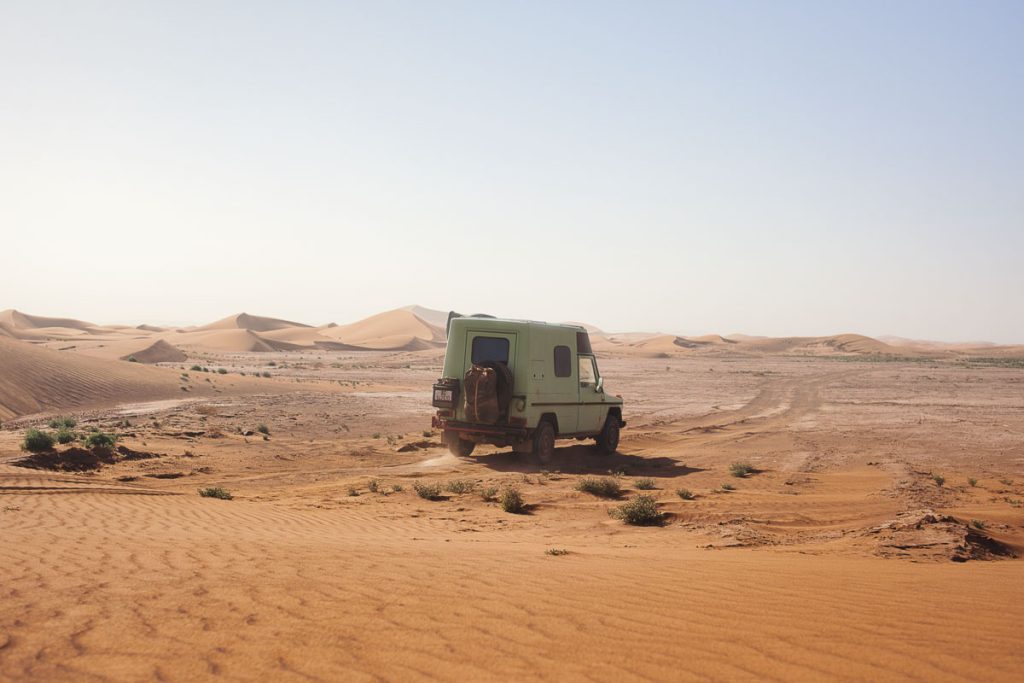
Three days in the desert reminded us that adventure does not necessarily mean going somewhere impossibly remote. Sometimes it is simply about leaving the road and seeing where it takes you.
Eventually, though, the Atlantic pulled us back.
We returned to the coast and traded four wheels for surfboards, working our way south in search of the legendary waves of Morocco’s western shoreline. The coast quickly became its own kind of rhythm: drive, surf, cook, sleep, repeat.
And somewhere along that coast, we met a familiar face again.
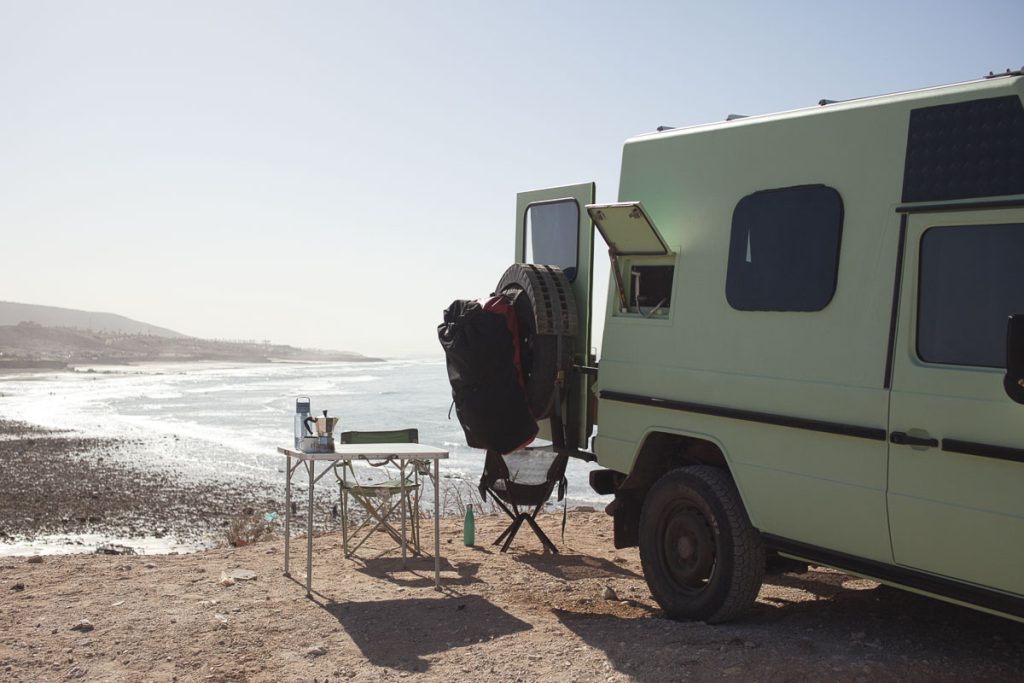
The Swiss woman we had first met while travelling through Portugal was there too. What had started as a casual acquaintance on the road slowly changed. Shared waves, meals, evenings around the vans and simply spending time together turned a familiar face into a friend.
It was another reminder that friendships on the road often develop differently. There is no long history behind them. Sometimes you simply meet, spend a few good days together, part ways — and then, months later, meet again somewhere completely unexpected.
The Atlantic coast was busy in places. The beaches and better-known regions had become popular winter destinations for European van travellers, particularly Germans escaping the cold further north.
There was nothing wrong with that. But after almost two months in Morocco, we felt the familiar pull again.
South.
The landscape became emptier as we followed the Atlantic down through Western Sahara. The distances grew longer and the settlements fewer. Over roughly 3,000 kilometres, there was surprisingly little that demanded our attention.
Dakhla was the exception.
We stopped there for almost two weeks to kitesurf, enjoying the wind and the enormous lagoon before continuing south. Beyond Dakhla, the landscape seemed to stretch endlessly. Road, sand, sky. Occasionally a truck, a windmill or a group of camels broke the monotony.
And then, eventually, we reached the border.
For us, this was more than just another immigration checkpoint.
Crossing from Morocco into Mauritania felt like crossing an invisible line between the world we knew and something else entirely. Until that moment, there had always been a certain familiarity. Europe was behind us, but Morocco still felt connected to it in many ways. We knew how things worked. We knew the roads. We knew what to expect.
Beyond the border, that certainty disappeared.
The road ahead led deeper into the Sahara, into countries we had never travelled through, towards landscapes and cultures we knew only from stories and maps.
We had spent months telling ourselves that the journey was about Africa.
Now, finally, it felt as though Africa was beginning.
We crossed the border into Mauritania, leaving the familiar world behind.
And suddenly, the adventure could begin.