Authored by TyreLife Solutions
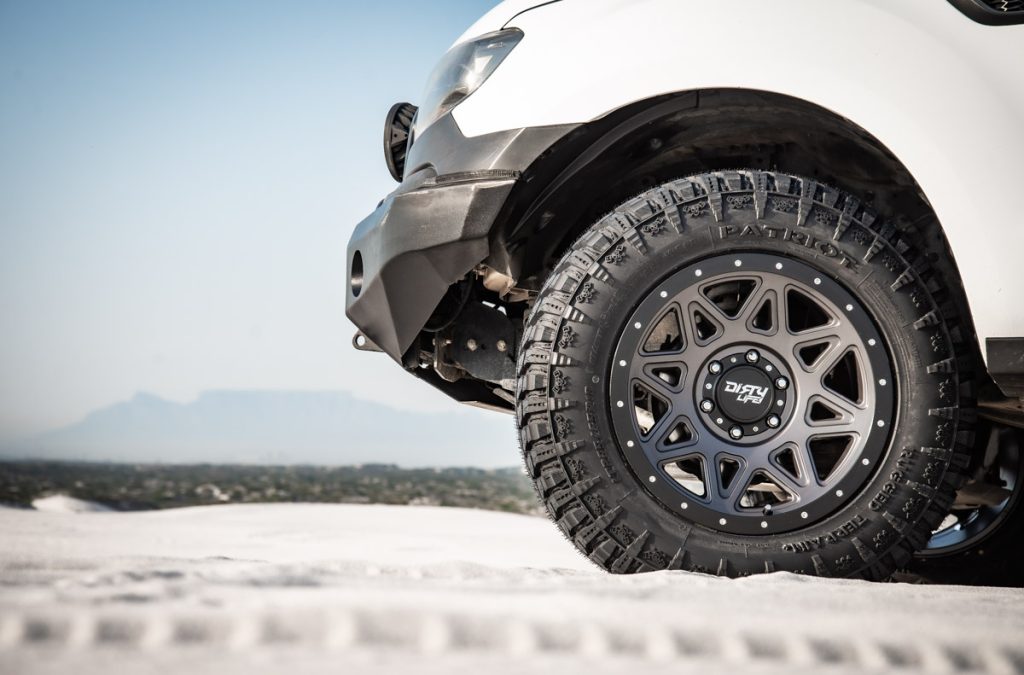
First some background. When it comes to buying off-road tyres, there’s little doubt that Light Truck (LT) variant tyres should be at the top of your shopping list, especially if you intend to drive off-road, tow a trailer (or caravan or boat), or heavily modify your vehicle with aftermarket accessories. You see, LT tyres have stronger carcasses, deeper treads, tougher compounds, and they’re capable of carrying heavier loads than their P-Metric equivalents. P-Metric is industry shorthand for passenger vehicle.
What many don’t realise is that the vast majority of all-terrain tyres (or ATs as they’re often commonly called) are P-Metric variants. So, although the tread pattern may suggest it’s an off-road tyre, the truth is that most P-metric tyres have poor load-carrying capabilities, limited puncture resistance, wear much faster, and offer little off-road durability against cuts and stone damage – when compared to an LT variant.
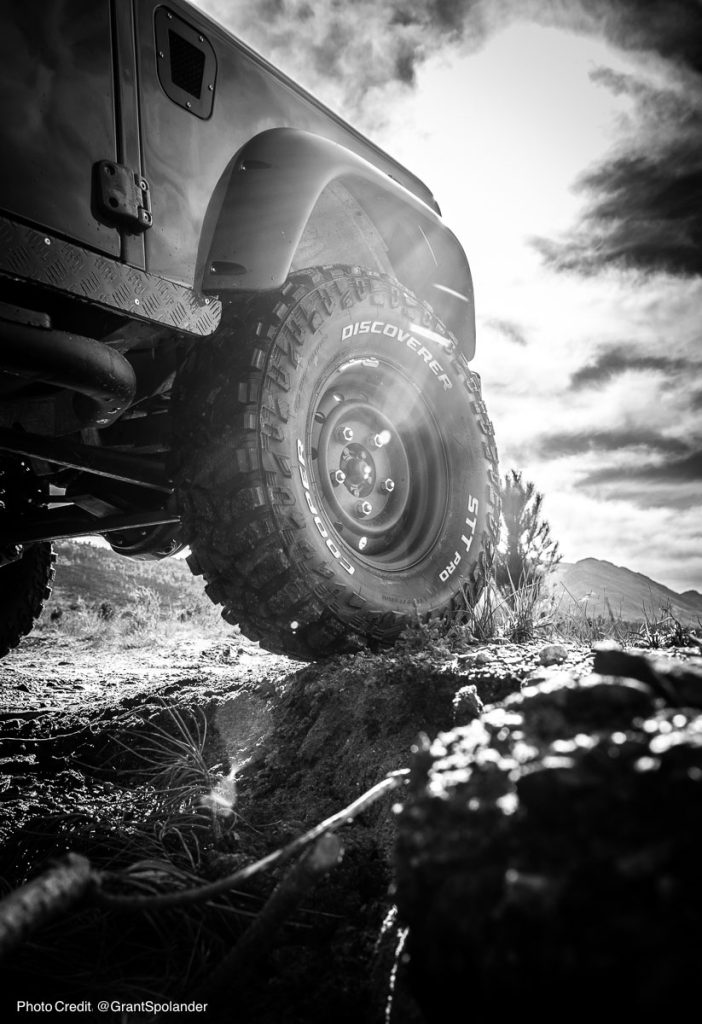
The interesting thing about mud-terrain tyres is that most of them are LT variants. It’s only in the all-terrain sector that the confusion occurs, and that’s because the visual differences between an LT and a P-Metric all-terrain are not always noticeable. There is no P-Metric lettering, so unless it says LT on the sidewall, you can safely assume it’s a P-Metric. Aside from this easily-overlooked sidewall detail, the two types of tyres may look identical in every other respect.
Bottom line, if you want a true off-road tyre which can handle off-road terrain without sustaining punctures, sidewall damage, or total tread destruction, you need an LT variant tyre so make sure you can see the letters’ LT’ on the sidewall. But why would vehicle manufacturers knowingly fit ‘inferior’ P-Metric tyres to their 4WD offerings? Two reasons…
Firstly, they’re competing against other vehicle manufacturers in the arenas of fuel economy, driving comfort, and emission standards – and these are all areas directly affected by the weight, strength and rigidity of the vehicle’s tyres. And secondly, vehicle manufacturers have to consider economics and retail price. Given that LT tyres can cost more than double their P-Metric alternatives, fitting LTs as standard spec to a vehicle would increase its cost which could lead to fewer sales.
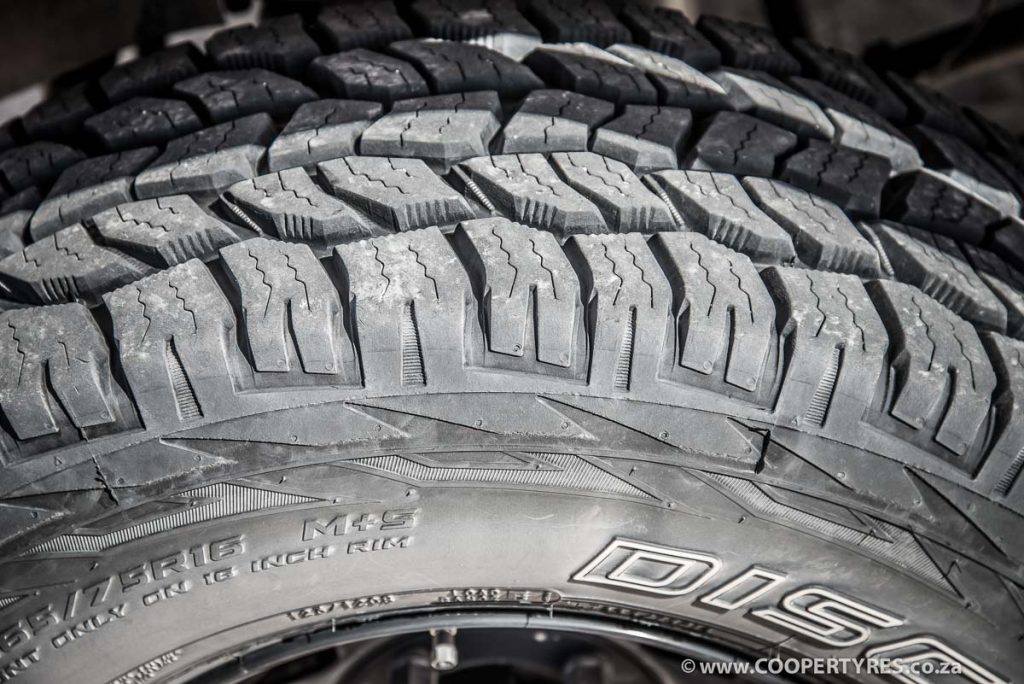
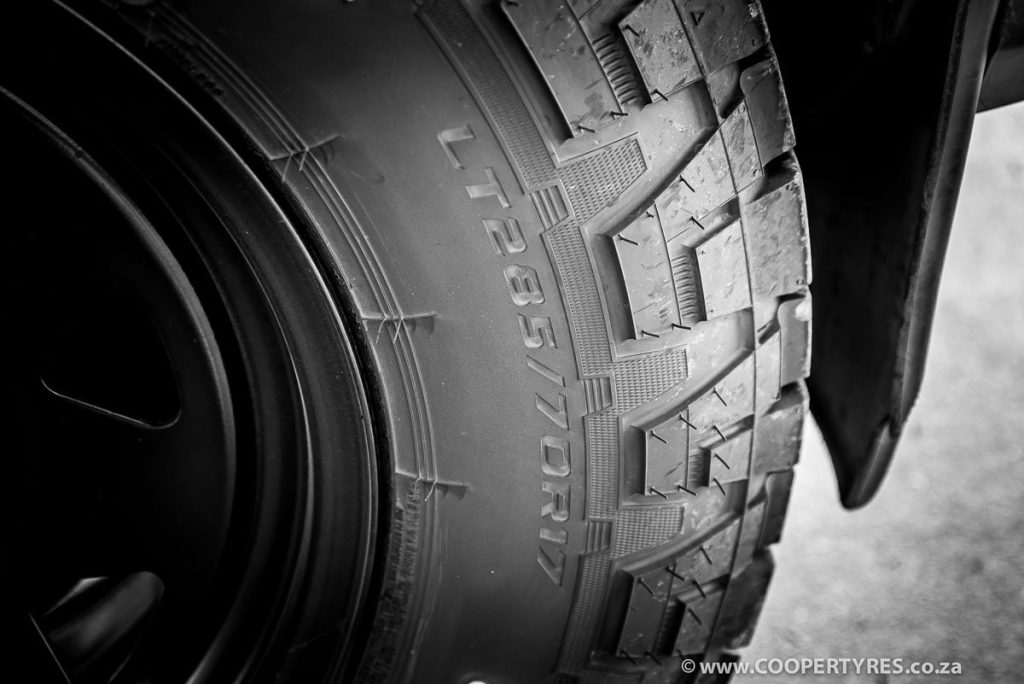
If it doesn’t say “LT” on the sidewall, it’s almost certainly a p-metric.
FUEL ECONOMY
So we’re back to the burning question, “Will an all-terrain or mud-terrain tyre affect my vehicle’s fuel consumption?” The short answer is yes. An aggressive tread design plays a big role in fuel economy, and that’s because large tread lugs typically have more wind drag and a higher rolling resistance.
However, there’s more to the subject of fuel economy than just tread design. Although certain tread patterns and compounds might offer up more rolling resistance, the tyre’s overall mass has the greater impact on fuel consumption. Heavy tyres require more energy to turn, and in most cases, LT tyres are considerably heavier than P-Metrics, sometimes up to 40% heavier! Hence the added fuel use. Naturally, if you also decide to fit a larger tyre than the vehicle manufacturer’s recommended diameter, this will also negatively impact fuel economy.
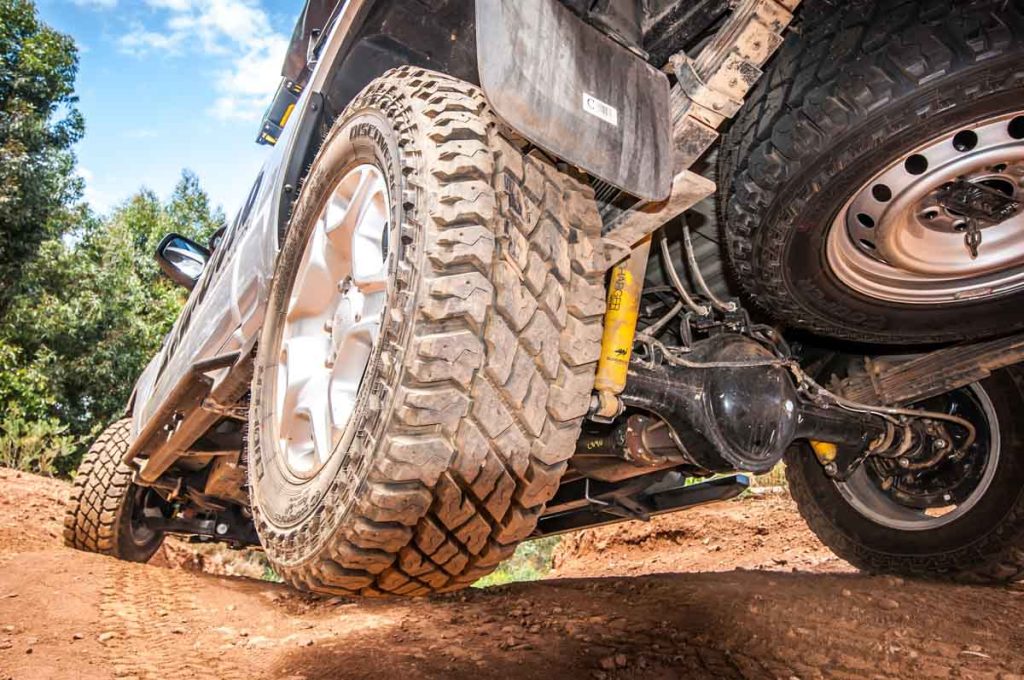
Finally, one should also remember that not all LT tyres are constructed equally; other factors, such as compound quality, steel reinforcement, steel gauge, and nylon-cord quantity and quality, come into play when choosing between brands. On that note, the decision to replace your factory-fitted P-metric tyres with a Light Truck tyre shouldn’t be taken lightly. The downside is a slight (but noticeable) decrease in fuel efficiency. The upsides are:
- Longer service life
- Significantly better puncture resistance
- Significantly better resistance to sidewall damage
- Better heat resistance
- Greater load-carrying capacity
- Vast improvement in off-road durability
- Better steering response due to stiffer sidewalls
Do your sums carefully. It’s often possible that the fuel consumption trade-off is more than offset by the advantages offered. Now that you know the facts, you can make an educated decision.