Arguably one of the most remote wilderness areas in Southern Africa, the great Makgadikgadi Pans of Botswana are the largest salt pans in the world!
Kingsley Holgate and his son Ross almost lost their lives trying to circumnavigate these pans on wind yachts. So, don’t be fooled. As beautiful as they are, they are also dangerous.
Having visited the Makgadikgadi numerous times, I’ve learned one or two things about driving on these deceptive pans. If you’re headed there anytime soon, here are some self-drive tips to help you along the way.

Solo – NEVER venture onto the pans alone!
Season – Do not attempt to cross the pans in the “wet season” unless you’re with an experienced guide.
Tyres – Deflate your tyres BEFORE entering the pans. Waiting to get stuck is not the answer.
Speed – Try maintaining a constant speed of around 50 – 60 km/h. You want your momentum to be enough to get you through the wet patches.
Tracks – When driving in convoy, watch the tracks in front of you. If you see the crust is broken and shows signs of wet ground, avoid the leading vehicle’s tracks.
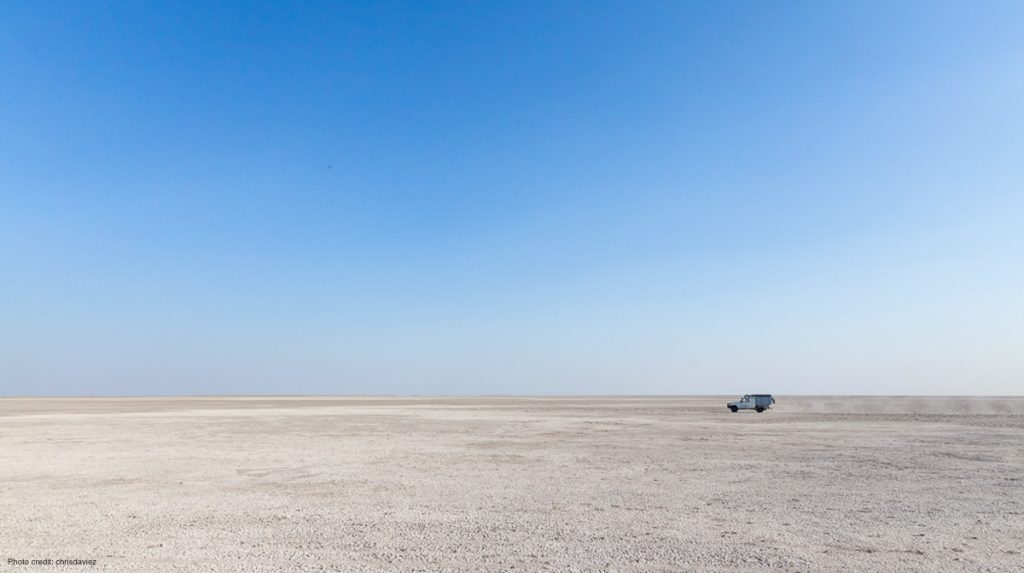
Edge – If the overall surface looks wet, don’t try to cut across the pans – this is where many people get stuck. Stick to what is known as the “pans edge,” which is usually drier and firmer. Having said that, still be alert!
Snatch – If you are stuck, stay calm and don’t spin your tyres – that will only worsen things. Assess the situation and remember that a traditional “snatch” recovery will likely not work, as the recovery vehicle will probably also get bogged.
Manpower – Experience has taught me the best way to free yourself is to dig soil away from the front of the tyres, and then use manpower in the form of friends pushing you free. Recovery tracks will definitely help. However, you must get them under the tyres before attempting the recovery.
Mud – Once you’re off the pans, remember to clear your rims of mud. You might think you have a tyre balance issue if you don’t!
Salt – The mud of the Makgadikgadi Pans is extremely salty and can cause corrosion. Clean mud off your vehicle’s sensors with a high- pressure cleaner as soon as possible.